


By Chelsea Ryan
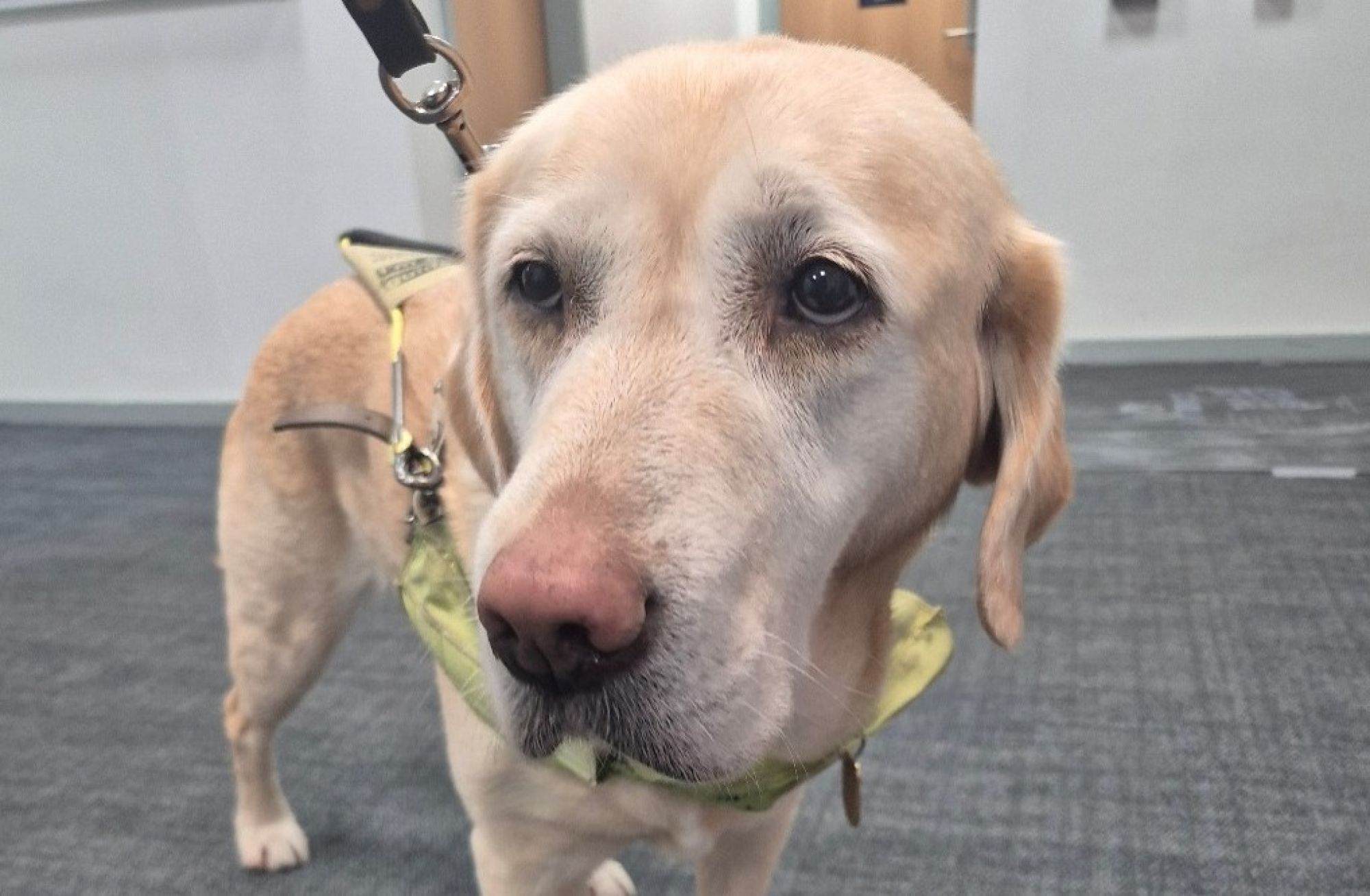
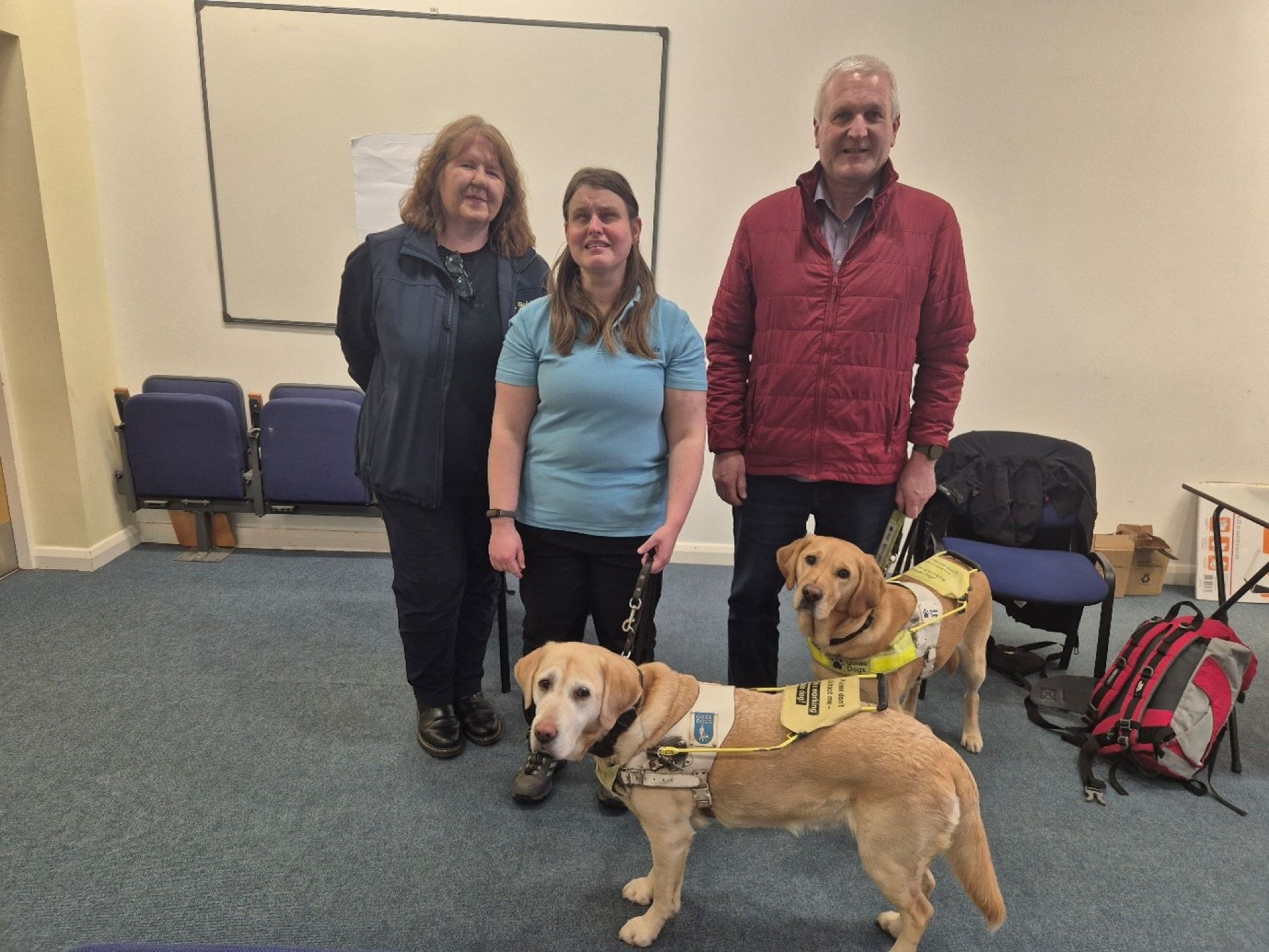
I had the honour of attending Community Sighted Guide Training, where we were joined by the lovely Sean and his guide dog Benny, and Tori with her guide dog Vivvy from Guide Dogs UK. The session was not just informative and interactive, it was inspiring, eye-opening, and above all, empowering.
I personally walked out of the classroom feeling motivated to use everything I learned to improve my communication and confidence when working with people with visual impairment. According to the Royal National Institute of Blind People (RNIB UK), around 2 million people in the UK live with sight loss severe enough to impact daily life, and due to an aging population, that number is expected to reach 4 million by 2050. These numbers highlight just how crucial it is for us as students and society broadly to understand how to support people with sight loss.
Who Are Guide Dogs UK?
Guide Dogs UK is a charity dedicated to supporting people with sight loss. They provide guide dogs, mobility training, and emotional support to help visually impaired people live safely and independently. Every year, they help thousands of people regain confidence and navigate the world with greater independence, freedom and improved quality of life.
But their work goes far beyond guide dogs. The charity campaigns for accessibility, offers advice on assistive technology, and provides support to families and carers. They also create networks for people to meet others with similar lived experiences, which can greatly improve quality of life. Guide Dogs UK’s approach is a reminder that independence, connection, and advocacy all go hand in hand.
Guide Dogs NI
Insights From Sean and Tori
In a previous life, I worked as a mental health recovery lived experience facilitator and this experience really connected with me as Sean and Tori shared their lived experiences, giving us a glimpse into a world many of us take for granted. One anecdote that really stayed with me was: “You might see a feather, but fall over an elephant to notice it.” This vividly illustrates how daily life as a visually impaired person requires balancing attention to small details while avoiding bigger obstacles. They also emphasised that there is no one standard amount of sight loss and that a person can be born without sight or could lose that sight at any point in life. This really showed that it could really affect any of us, or family or friends, at any point in life.
They demonstrated challenges around activities we often take for granted such as navigating busy streets, taking public transport, or shopping for everyday items like shampoo. Benny and Vivvy are more than companions, they are essential partners who provide independence, confidence, and reassurance. Their guidance allows Sean and Tori to explore the world safely and freely, something many of us may rarely think about.
The session also included striking statistics about visual impairment in the UK, showing that the challenges of sight loss extend beyond mobility. They impact education, employment, social interactions, and mental health, but with support, guidance and community adaptations, challenges can become much smaller.
Guide Dogs NI Visitors
How Students Can Help
As students, there are practical ways we can make life easier for people with sight loss:
Be aware and considerate: Introduce yourself, offer to guide, or give verbal directions. Small gestures can make a huge difference.
Accessibility in shared spaces: Keep pathways clear, avoid leaving bags in common areas, and be mindful in lecture halls.
Spread awareness: Understanding the challenges people with sight loss face allows us to advocate for better practices and inclusive designs.
Report hazards: If you notice a potential risk, no matter how small, report it. What may seem minor to you could be dangerous for someone with sight loss.
Top Tips for guiding someone:
- Ask if the person would like some help and introduce yourself
- Ask where the person would like to go
- Clarify their preferred side
- Offer a ‘Guiding Arm’
- Set off and check the walking pace is okay
- Navigate and communicate in narrow spaces
- Finish assistance and tell the person you are leaving the area.
Example on how to guide someone with sight loss can be found in the video below.
how to guide someone with sight loss
How Ulster University Supports Accessibility
Student Wellbeing has made commendable efforts to support students with visual impairments:
- Accessible campus maps, including braille and navigation aids
- Assistive technology and software in classrooms
- Reasonable adjustments for students registered with AccessABILITY
As a first-year medical student navigating changes every day, this visit from Guide Dogs UK was a powerful reminder that small acts of awareness, patience, and support combined with university or societal adaptations can transform the daily experiences of people living with sight loss. Sean, Tori, Benny, and Vivvy inspired us to think about how we, as students and as members of society, can make the world a little more inclusive, one step at a time.
About the Author
Chelsea is from Tipperary and studies Graduate Entry Medicine at Ulster’s Derry~Londonderry campus. With a background in Health Promotion and Mental Health from SETU Waterford, she’s passionate about wellbeing and peer support, and shares her experiences as a first-generation student through her blog.