

SDG 13 - Teaching
The University equips students with the knowledge and skills to understand climate change and respond to its impacts. Climate-related themes are embedded across teaching, helping students consider environmental responsibility, resilience, and low-carbon solutions within their disciplines.
Undergraduate Courses
Postgraduate Courses

SDG 13 - Research
Our research addresses the causes and impacts of climate change and supports the development of evidence-based mitigation and adaptation solutions. The University’s research spans disciplines, informing policy, industry, and community responses to climate risk.
Research Stories
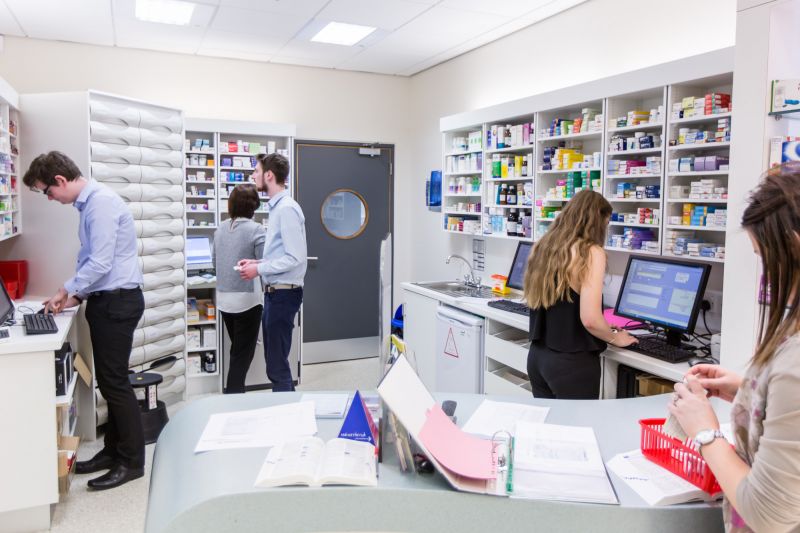
- Future pharmacists and climate action: a qualitative study of students' views on environmental sustainability in education and practice
- State dependent ice-sheet resonance under Cenozoic and future climates
- 6G-ENABLED Integrated Sensing and Communications to Tackle Climate Change: the Geothermal Sensing and Monitoring Model and its Implications
- Achieving agricultural and environmental targets in a changing climate requires a whole-system based approach
Centre for Environmental Spatial Data Analytics
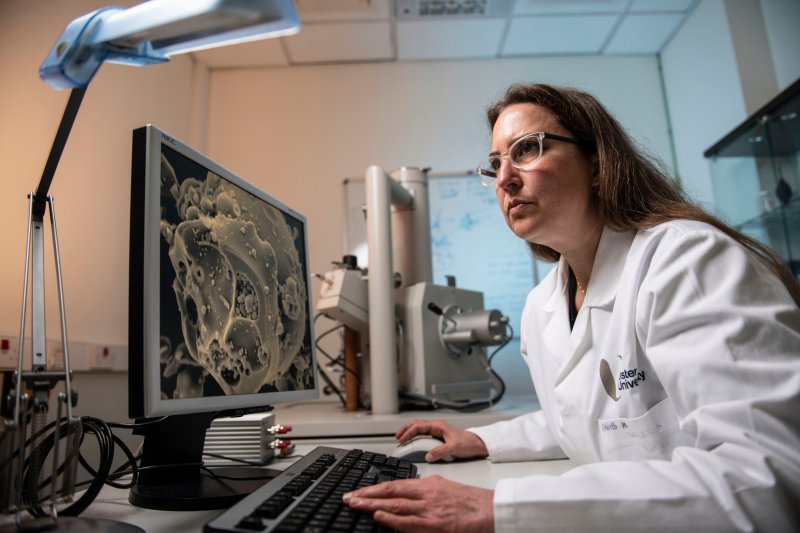
Ulster University’s Centre for Environmental Spatial Data Analytics (CESDA) is a leading interdisciplinary research centre using advanced spatial data science to address climate-related environmental and societal challenges. Its work spans climate resilience, freshwater security, coastal systems, and sustainability, with two research clusters focused on environmental processes and societal impacts. Working across more than 30 countries, CESDA collaborates closely with policymakers to turn complex data into actionable climate solutions, while equipping students and researchers to contribute to global climate action.
SDG 13 - Partnerships
Through collaboration with industry, local authorities, communities, and global networks, we work to accelerate decarbonisation, build climate resilience, and support a just transition. By sharing knowledge, data, and innovation, our partnerships help turn climate ambition into measurable action and real-world impact.
Partnership Stories
- New €6.5m cross-border partnership targets clean air and public health
- Designing Tomorrow: Future Island-Island and Rathlin Island Shaping Green Futures
- Students take on golf’s green future in two-day Sustainable Innovation Challenge
- Ulster University to lead €9.6m project on climate change and its impacts on the Irish Coast
Klimeo
A partnership between an Ulster University Professor of Data Analytics, a Research Director from the School of Computing and Horrible Brands has led to the development of Klimeo, an innovative Net Zero software by Aethergy. This groundbreaking project helps companies quantify and track their climate impact, providing AI-augmented analysis for actionable insights into their environmental footprints.

SDG 13 - Operations
We are working to reduce greenhouse gas emissions, improve energy efficiency, and increase the use of low-carbon and renewable energy across our estate. Through data-led decision-making, sustainable procurement, and continuous improvement, we aim to minimise our environmental impact while supporting a resilient, low-carbon future.
Journey to Net Zero
The University has made excellent progress in reducing campus operational carbon emissions [scopes 1&2] to date reducing from 19,889 tCO2e in 2005/06 to 7,754 tCO2e in 2023/24 and exceeding the target within its last carbon management plan.
The University has completed a carbon emission baseline assessment across all its activities using the 2018/19 academic year and understands its baseline emissions data across Scope 1, 2, and 3 emissions.
The emissions baseline provided the foundation for conducting a net zero modelling project with the aim of providing an evidence base from which to develop interim carbon targets as part of our Net Zero commitment and journey to 2050. Measuring, reducing and reporting on Scope 1, 2, and 3 emissions will include robust carbon accounting methodologies the implementation of a range of actions including:
- Campus and building portfolio assessments and detailed strategies for reducing electrical and heat demand, phasing out gas usage and assessing embodied carbon on future new build and retrofit construction.
- The creation, adoption, and implementation of relevant policies i.e., introduction of innovative business travel policies.
- Focused engagement with key stakeholders, such as suppliers, local government authorities and the student body, to achieve the emissions reduction targets.
- Target-setting for supply chain decarbonisation to reduce upstream Scope 3 emissions.
- Regular annual assessments of carbon emissions to ensure decarbonisation is proceeding at an optimal rate consistent with the net zero carbon roadmap.
- Improvement of data quality and collection processes.
Scope 3 Emissions
Through the HESA Estates Management Record and our Annual Sustainability Report, we report on Scope 3 emissions in the following areas:
- Purchased goods and services
- Capital goods including building and refurbishment
- Transport and distribution
- Waste
- Water
- Business Travel
- Staff and Student Commuting
- Fuel and Energy Related Activities (FERA)
We are developing an approach to measuring, reporting, and setting targets for Scope 3 emissions. In the interim we operate an environmental sustainability action plan, approved by the Sustainability Steering Group and sets out SMART (Specific, Measurable, Achievable, Relevant, Time-bound) targets in our Net Zero journey and for improving our environmental performance. It focuses on reducing emissions, enhancing energy efficiency, embedding sustainability in procurement, and engaging our community through education and behaviour change, to build a more sustainable future.
Environmental Sustainability Policy Statement
Ulster University is committed to embedding environmental sustainability across all areas of its operations, teaching, research, and engagement. Our Environmental Sustainability Policy Statement outlines our strategic approach to reducing carbon emissions, minimising waste, conserving resources, and enhancing biodiversity. Guided by international standards and national priorities, we aim to lead by example, fostering a culture of sustainability that supports our students, staff, and wider community in creating a more resilient and sustainable future. The Policy Statement also demonstrates Ulster's commitment to integrating sustainability into the curriculum.
Carbon Literacy Training
Ulster University is committed to building a sustainable future by equipping staff and students with the knowledge and skills to take meaningful climate action. Our free, accredited Carbon Literacy Training programme raises awareness of climate change impacts and practical ways to reduce carbon footprints both at work and in daily life. By engaging staff and students across the University, the training fosters a culture of environmental responsibility, empowering individuals to lead and support sustainability initiatives throughout the University.
SOS-UK Green Impact
Ulster University Students' Union actively participates in the SOS-UK Green Impact programme, where student auditors assess and recognise efforts to reduce environmental impact. This collaborative initiative empowers both students to work together towards the University’s sustainability goals, fostering a culture of continuous improvement and environmental responsibility across campus.
Net Zero Challenge
The Net Zero Challenge is an initiative that empowers students and staff to take meaningful climate action through everyday sustainable choices. By logging eco-friendly activities like walking or cycling, reducing waste, and cutting energy use, participants earn Green Points and compete on individual and university-wide leader boards. Every month, there's a chance to win a £20 voucher for Storybox NI.