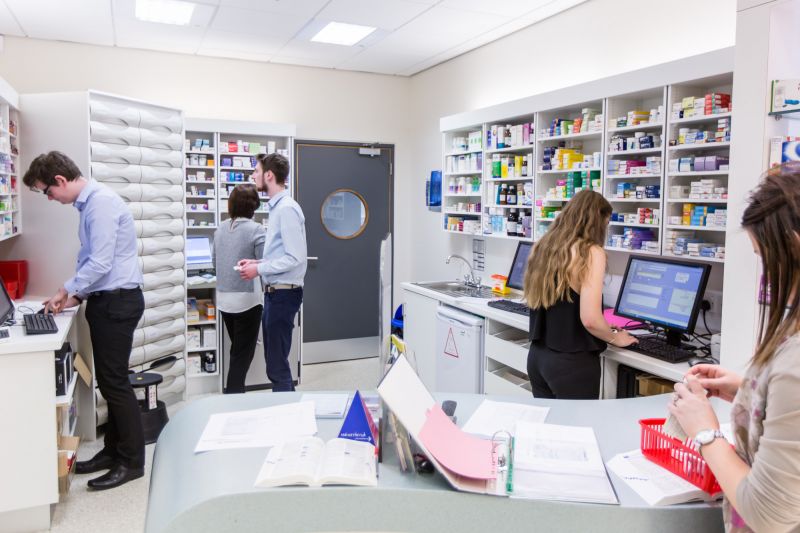
How can public libraries in Northern Ireland support children and young people with special educational needs (SEN) and their parents/carers?
Apply and key information
This project is funded by:
- Department for the Economy (DfE)
Summary
Public libraries are vital community hubs, yet their potential to support children with special educational needs (SEN) and their families remains underexplored.
This research project will investigate how public libraries can better serve children with special educational needs (cognitive, behavioural, communication or physical difficulties), and their parents or carers. It will explore current practices, barriers to access, and innovative strategies for inclusion as well as providing an opportunity to examine early years interventions and literacy supports.
It will be framed by the Universal Design for Learning (UDL) theoretical framework, which guides the design of environments, resources and practices, so they are accessible and effective for all learners, regardless of ability or background.
The UDL framework enables a critical exploration of how public libraries, as community institutions, can reduce barriers and foster inclusive environments for children with special educational needs and their parents. By emphasising flexible approaches to engagement, representation, and expression, UDL seeks to create accessible opportunities that proactively support the diverse needs of children and families.
In the context of the Northern Ireland public library service, UDL provides a lens for evaluating and enhancing services so that children with special educational needs and their parents can fully participate in and benefit from library programmes, space and resources.
Key questions of this project include:
- What are the current roles and services of public libraries in supporting children with special educational needs and their parents?
- What challenges do families and library staff face in accessing and delivering inclusive library services?
- What best practices and new approaches can enhance the library experience for these children and their families?
To apply for this opportunity, a detailed research proposal and articulate personal statement are required. Please note that we will only accept one application per applicant. Multiple applications will not be considered.
AccessNI clearance required
Please note, the successful candidate will be required to obtain AccessNI clearance prior to registration due to the nature of the project.
Essential criteria
Applicants should hold, or expect to obtain, a First or Upper Second Class Honours Degree in a subject relevant to the proposed area of study.
We may also consider applications from those who hold equivalent qualifications, for example, a Lower Second Class Honours Degree plus a Master’s Degree with Distinction.
In exceptional circumstances, the University may consider a portfolio of evidence from applicants who have appropriate professional experience which is equivalent to the learning outcomes of an Honours degree in lieu of academic qualifications.
- A comprehensive and articulate personal statement demonstrating interest in the subject area
- Research proposal of 1500 words detailing aims, objectives, milestones and methodology of the project
Desirable Criteria
If the University receives a large number of applicants for the project, the following desirable criteria may be applied to shortlist applicants for interview.
Equal Opportunities
The University is an equal opportunities employer and welcomes applicants from all sections of the community, particularly from those with disabilities.
Appointment will be made on merit.
Funding and eligibility
This project is funded by:
- Department for the Economy (DfE)
This scholarship will cover tuition fees and provide a maintenance allowance of £21,000* (tbc) per annum for three years (subject to satisfactory academic performance). A Research Training Support Grant (RTSG) of approximately £900 per annum is also available.
To be eligible for these scholarships, applicants must meet the following criteria:
- Have pre-settled status, or
- Have indefinite leave to remain or enter, or
Applicants should also meet the residency criteria which requires that they have lived in the EEA, Switzerland, the UK or Gibraltar for at least the three years preceding the start date of the research degree programme.
Applicants who already hold a doctoral degree or who have been registered on a programme of research leading to the award of a doctoral degree on a full-time basis for more than one year (or part-time equivalent) are NOT eligible to apply for an award.
Due consideration should be given to financing your studies.
*Part time PhD scholarships may be available, based on 0.5 of the full time rate, and will require a six year registration period
Recommended reading
- Kaeding, J., Velasquez, D. L., & Price, D. (2017). Public Libraries and Access for Children with Disabilities and Their Families: A Proposed Inclusive Library Model. Journal of the Australian Library and Information Association, 66(2), 96–115.
- Monahan, F., O'Connor Bones, U., Taggart, L, McDowell, C. & Mulhall, P. (2025) Supporting children with dyslexia in primary school settings through effective professional development of teachers and classroom assistants: An international scoping review. Journal of Research in Special Educational Needs, 00, 1-22.
- Bates, J., Finlay, J. & Hanlon, S. (2025) Setting out a methodological framework for undertaking effective reviews of national prison library services: Design of an inclusive methodology for the Irish Prison Library Review. Library and Information Science Research, 47(2).
- Bates, J. & O’Connor Bones, U. (2018) A Community Conversation Toolkit. Commissioned by the Integrated Education Fund. Ulster University.
- Department for Communities (2025) The Heritage, Culture and Creativity Programme - Purpose and Framework.
- Department of Education (2025) Special Educational Needs Reform Agenda.
The Doctoral College at Ulster University


 Ulster Homepage