



The H.S.K.T. (Head, Shoulders, Knees and Toes) Coercive Control Awareness Campaign, developed in partnership with The Executive Office, aims to help the public recognise the early signs of abusive behaviour and better understand coercive control as a form of violence against women and girls.
Launched by Ministers from The Executive Office, the campaign is underpinned by Ulster University research expertise in psychology and gender-based violence, translating academic insight into practical tools for communities, professionals and policymakers.
At the heart of the campaign is research led by Dr Susan Lagdon, MBE, Senior Lecturer in Psychology at Ulster University, whose work has highlighted the prevalence and impact of coercive control across Northern Ireland.
Dr Lagdon said:
“Research has consistently shown that violence against women and girls remains a significant issue in our society. We also know that many adults and young people across Northern Ireland are unfamiliar with the term coercive control and may not fully understand its impact.
"The development of the H.S.K.T. Coercive Control Awareness Campaign is the result of evidence-based design, strong partnerships, and the dedication of many committed individuals working together to create meaningful change.”
Drawing on findings from Ulster University’s ‘Every Voice Matters’ research, the campaign addresses gaps in awareness, particularly around psychological and emotional abuse, which often go unrecognised.
Professor Paul Bartholomew, Vice-Chancellor of Ulster University, added:
“Dr Susan Lagdon’s work is driving vital dialogue on coercive control, and it is encouraging to see Ulster University research shaping policy and translating into practical tools for meaningful community impact.”
What is the H.S.K.T. campaign?
The campaign uses a simple and memorable H.S.K.T. mnemonic to help individuals reflect on their relationships:
- Head – Are you doubting your thoughts or feelings?
- Shoulders – Are you constantly looking over your shoulder?
- Knees – Are you apologising without knowing why?
- Toes – Do you feel like you’re walking on eggshells?
By framing complex behaviours in accessible terms, the campaign supports early recognition, prevention and intervention.
Training and toolkit developed by Ulster University
A key contribution from Ulster University has been the design and delivery of an evidence-based training toolkit and resource pack, enabling frontline workers to identify and respond to coercive control.
- Nearly 100 frontline professionals have already been trained
- Training delivered across health services, PSNI, and community organisations
- A train-the-trainer model is creating a ripple effect across sectors
The pilot phase (September to December 2025) demonstrated strong uptake and impact, with further training delivered in March 2026 and plans underway for wider rollout.
Junior Minister Aisling Reid said:
“Ending violence against women and girls is a key priority for the Executive and this campaign, developed in partnership with Ulster University, is a key part of our commitment. By raising awareness, I hope this campaign helps women and girls recognise the warning signs and feel confident seeking support.”
Junior Minister Joanne Bunting added:
“Training delivered through the pilot phase is already making a difference. Those who have been trained are now equipping others, creating a ripple effect that strengthens awareness, supports early intervention, and empowers more people to identify abuse and take action, ensuring no one faces abuse alone.”
Launch event brings together cross-sector leadership
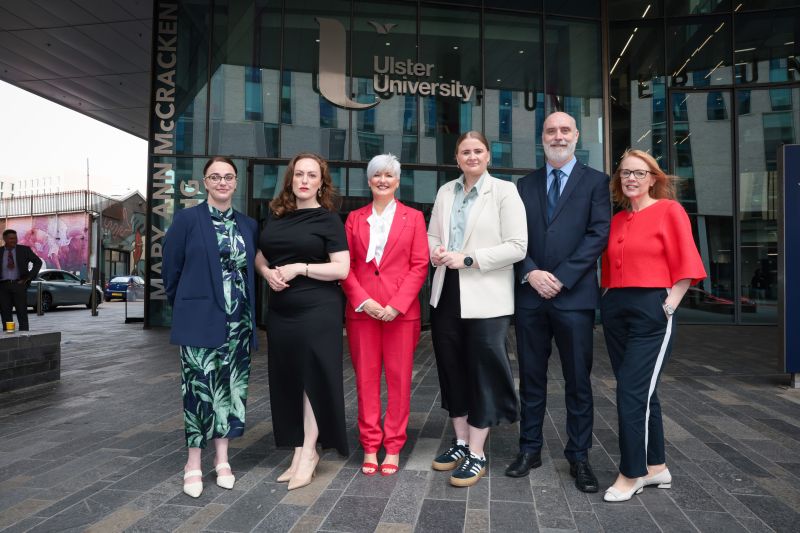
The campaign was formally launched at a dedicated event featuring Ulster University researchers, policymakers and frontline practitioners, showcasing the collaborative approach behind the initiative. Chaired by broadcast journalist Eve Rosato, the event also explored next steps for scaling the campaign and embedding training across organisations in Northern Ireland.
The H.S.K.T. campaign forms part of the Executive Office’s Ending Violence Against Women and Girls (EVAWG) Strategic Framework, contributing to:
- Prevention and early intervention
- Improved understanding of abuse
- Strengthened cross-sector responses
Ulster University continues to work closely with partners to expand the evidence base, support policy development and deliver training that creates safer communities.
A continued commitment to societal change
Through its leadership in research, education and community partnership, Ulster University is helping to translate knowledge into action, ensuring that coercive control is recognised, challenged and addressed.
As the campaign rolls out more widely, Ulster University will remain central to its development, supporting future training, evaluation and public awareness initiatives aimed at ending violence against women and girls.