


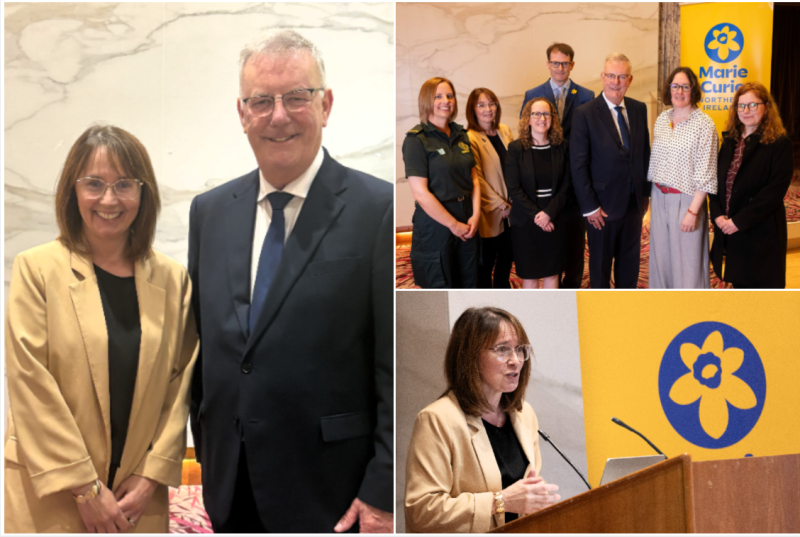
Ulster University was represented at a high-profile end-of-life care event last week, where Dr Felicity Hasson shared important research findings highlighting the vital role paramedics play in supporting patients at the end of life.
Dr Felicity Hasson (opens in new window), Senior Lecturer in the Institute of Nursing Research at Ulster University, presented findings from the Marie Curie-funded ParAID NI (Paramedics and Advanced Illness and Dying in Northern Ireland) project at a stakeholder workshop, ‘Unscheduled Care in the Last Year of Life’, held at the Stormont Hotel on 17 June.
The event, which was opened by Health Minister Mike Nesbitt, brought together representatives from healthcare, policy and voluntary sector organisations to discuss how end-of-life care can be further strengthened across Northern Ireland.
The project explored Northern Ireland Ambulance Service (NIAS) paramedics' perceptions and experiences of providing end-of-life care, examining current practice, challenges faced by frontline staff and opportunities to enhance their contribution to patient care.
Understanding the Paramedic Role in End-of-Life Care
The research report, Perceptions and Experiences of Providing End-of-Life Care Among the Northern Ireland Paramedic Workforce, was led by Dr Felicity Hasson (opens in new window), alongside colleagues Dr Natasha Campling (University of Southampton), Dr Sinead Keeney (opens in new window), Dr Paul Slater (opens in new window) and Professor Sonja McIlfatrick (opens in new window) (Ulster University) and Julia Wolfe (NIAS).
The study was developed in response to growing recognition that many patients wish to remain at home during the final stages of life, while paramedics are increasingly required to make complex clinical decisions in end-of-life situations. Despite this, limited research had previously explored paramedics' experiences and perspectives in this area.
The project aimed to identify NIAS paramedics' perceptions of current end-of-life care practice, the factors influencing their role and strategies that could strengthen their contribution to supporting patients and families.
Key Findings
The research involved an online survey distributed to all 535 registered NIAS paramedics, achieving a 34% response rate. Most respondents (80%) worked in frontline operational roles, while more than a quarter also held leadership responsibilities.
Findings revealed that end-of-life care forms a significant part of paramedic practice, yet many clinicians are required to make decisions with limited information and support.
Key findings included:
- 58% of respondents said they rarely or never knew in advance they were attending an end-of-life care call
- 39% reported attending patients in their last year of life every 8–14 shifts
- Nearly half (48%) indicated that at least half of the patients they attended in their final year of life were living in residential or nursing homes
- Only 34% reported having access to an existing Advance Care Plan (ACP) when attending a patient.
The survey also highlighted the broad range of support provided by paramedics beyond emergency clinical care:
- 90% regularly provided advice and support to family members and friends
- 61% provided support to care home and nursing home staff
- Almost half (48%) reported ‘sometimes’ administering medicines for symptom control.
Challenges Facing Paramedics
The findings identified several barriers that can affect the delivery of end-of-life care.
Paramedics reported challenges accessing appropriate referral pathways, particularly outside normal working hours, with reliance often placed on GPs and community nursing teams. Respondents also highlighted limited access to specialist oncology teams and palliative care support.
Training emerged as another significant issue, with many respondents reporting low confidence in managing end-of-life situations and expressed concerns about "doing the wrong thing."
The study identified gaps in both pre-registration education and ongoing professional development, alongside tensions between traditional life-preservation training and the ethos of palliative and end-of-life care.
Recommendations for Improvement
The research concludes that paramedics are delivering end-of-life care in complex, high-pressure environments, often with limited support and inconsistent access to patient information.
To address these challenges, the report recommends:
- Improving access to anticipatory medicines and specialist clinical advice
- Developing referral systems
- Providing end-of-life care training for paramedics
- Fostering communities of practice and offering tailored continuing professional development opportunities to boost paramedic increase confidence and competence.
Informing Future Practice
The workshop provided an important opportunity for healthcare professionals, policymakers and sector partners to consider how these findings can help shape future service development and improve experiences for patients and families approaching the end of life.
Dr Hasson's presentation highlighted the essential contribution paramedics make to end-of-life care across Northern Ireland and reinforced the importance of equipping the workforce with the support needed to deliver high-quality, person-centred care when it matters most.
Dr Felicity Hassan explains:
“It was a privilege to present the findings of the ParAID NI project to policymakers, healthcare professionals and stakeholders committed to improving end-of-life care across Northern Ireland. The research demonstrates that while paramedics are delivering compassionate and complex care in challenging circumstances, there is a clear need for improved access to information, specialist support and training.
“By sharing this evidence at this ‘Unscheduled Care in the Last Year of Life’ event, we hope that these findings will help shape future practice and policy to better support both the workforce and the patients and families they serve.”
The ParAID NI project was funded by Marie Curie, whose ongoing work continues to support research and service improvement initiatives aimed at enhancing palliative and end-of-life care across the UK.