

SDG 4 - Teaching
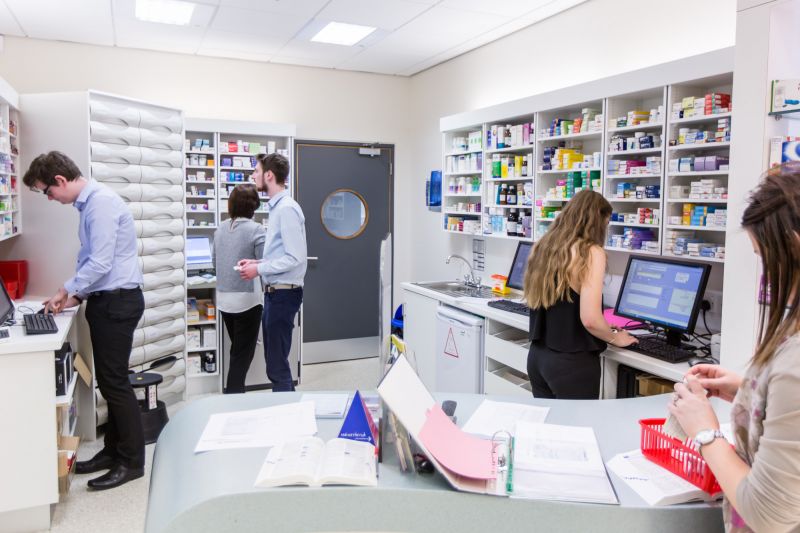
At Ulster University, our teaching programmes empower educators to inspire learners, promote inclusion and drive positive change through education.
Postgraduate courses
- PGCE Primary Education
- PGCE Further Education
- MEd Education with Specialisms
- PGCE Art and Design
- PGCE English with Drama and Media Studies
- PGCE Geography
- PGCE History
- PGCE Home Economics with Food & Nutrition Science
- PGCE Music
- PGCE Physical Education
- PGCE Technology and Design with Engineering and
- Manufacturing
Education for Sustainable Development (ESD)
Education for Sustainable Development (ESD) empowers students with the knowledge, skills, values, and attitudes to make responsible decisions that support an economically viable, environmentally sound, and socially just world. At Ulster University, we embed the UN Sustainable Development Goals (SDGs) across our curriculum, using critical, inclusive, and active teaching to develop students’ competencies. All staff integrate the SDGs and relevant subject knowledge into their modules and programmes to prepare students to address global social, economic, and environmental challenges.
Principles and Qualities
The Ulster University Principles underpin our operational plans and guide the continuous enhancement of learning, teaching, and the student experience. Our Qualities define the common features of our provision and shape how we prepare students to meet current and future sustainability challenges. Through our programmes and teaching approaches, we aim to develop students as responsible, active, and inclusive global citizens. The Learning Enhancement Directorate supports staff in embedding these principles and enhancing their practice in line with this quality.
View our Principles and Qualities
Graduate Attributes
Ulster University’s Graduate Attributes are designed to distinguish our graduates, helping them excel academically while preparing them for the future. Attribute 4: Active Citizen focuses on developing graduates who are ethical, engaged, and sustainable, making a positive impact in society.
- Citizen with Integrity: critically self-aware, ethical, respectful, and able to make values-driven decisions.
- Inclusive Citizen: participates actively in communities, demonstrates empathy, and respects diversity.
- Sustainable Citizen: takes responsibility for actions affecting sustainability and applies practical solutions to challenges.
- Future Thinker: anticipates and evaluates local and global challenges, creating a personal vision to navigate change and contribute to a better future.
Responsible Futures
Ulster University has been awarded the SOS-UK Responsible Futures Accreditation, a student-led programme that embeds sustainability across all aspects of learning. The accreditation is based on a comprehensive audit of 50 criteria, including leadership, strategy, policy, interventions, and outreach. By following the Responsible Futures framework, the University ensures students develop the knowledge, skills, and attributes to address the climate and ecological emergency, promote climate justice, and contribute to a socially just, sustainable future.
Visit our Responsible Futures website
SDG Teach-In
Ulster University participates in the annual SOS-UK SDG Teach-In, an initiative that raises awareness of the UN Sustainable Development Goals (SDGs) and encourages students to tackle pressing global challenges. Educators are invited to ‘Take the Pledge’ to include the SDGs in at least one teaching or learning support session during March. In 2025, Ulster University ranked 2nd for the number of educators participating and 6th for the highest percentage of students reached, demonstrating its commitment to embedding sustainability across the curriculum.
Read more about the SDG Teach-In
Living Labs
By embedding Living Labs into the academic experience, Ulster University fosters an educational ecosystem where innovation, research, and community health challenges intersect.
- Ulster University’s Centre for Digital Healthcare Technology (CDHT) uses the 'Living Lab' approach by offering learners the opportunity to engage directly with clinicians and patients in a real clinical setting. The Community Innovation Living Lab focuses on primary and home-based care.
- The School of Geography and Environmental Sciences runs the 'Our Living Classroom' project which utilises the Coleraine campus for teaching biodiversity and conservation. They established 25 experimental ecology plots, working with students on invasive species and implemented bird and bat boxes for monitoring wildlife on campus.
Flexible Learning and Professional Development
Ulster University promotes lifelong learning through flexible short courses and CPD programmes that support upskilling, reskilling, and career development. The Centre for Flexible Education delivers tailored courses, bespoke programmes, and workplace learning accreditation in partnership with industry and the third sector. Ulster supports adult learners, including those returning to education, and offers staff a range of development opportunities via the LEARN portal.
SDG 4 - Research
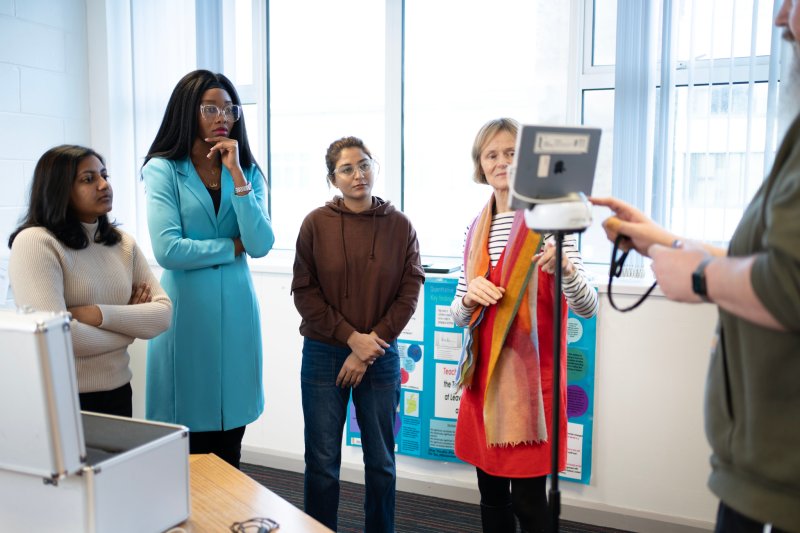
Ulster University’s research in SDG 4 focuses developing evidence-based approaches and innovative practices, our work supports social mobility, informs policy, and helps create a skilled, knowledgeable, and inclusive society.
Research Stories
Home-school partnership with migrant families: a way forward on the island of Ireland
Duplication in a Divided Society: a case study of primary schools in Northern Ireland
UNESCO Centre
The UNESCO Centre conducts leading research, development, and teaching on children and youth, with a focus on international development and education’s role in peacebuilding. Globally recognised, it has influenced debates with organisations such as the World Bank, UNICEF, and UNESCO, with projects across Africa, Central Asia, Latin America, and the Middle East. Locally, the Centre informs discussions on the efficiency, effectiveness, and sustainability of Northern Ireland’s education system, critically shaping policy and practice.

SDG 4 - Partnerships
Ulster University’s partnerships in SDG 4 focus on collaboration with schools, communities, and international organisations to widen access, raise attainment, and enhance learning opportunities.
Discovery Academy
The Ulster University Schools Discovery Academy is an award-winning, fully inclusive virtual learning environment designed to inspire curiosity, demystify higher education, and support informed decision-making among school pupils. Co-designed by Educational Outreach Officers and academic staff across all four faculties, it draws on Ulster University’s teaching, research, and professional expertise to deliver engaging content for pupils from Years 8–14.
Manchester United Foundation
Ulster University’s Educational Partnerships with schools aim to widen participation and raise attainment in post-primary education, preparing young people for progression to higher-level learning. In partnership with the Manchester United Foundation, this work uses the power of football to engage and inspire young people across the Foyle Learning Community.