



Page content
Degree Apprenticeships
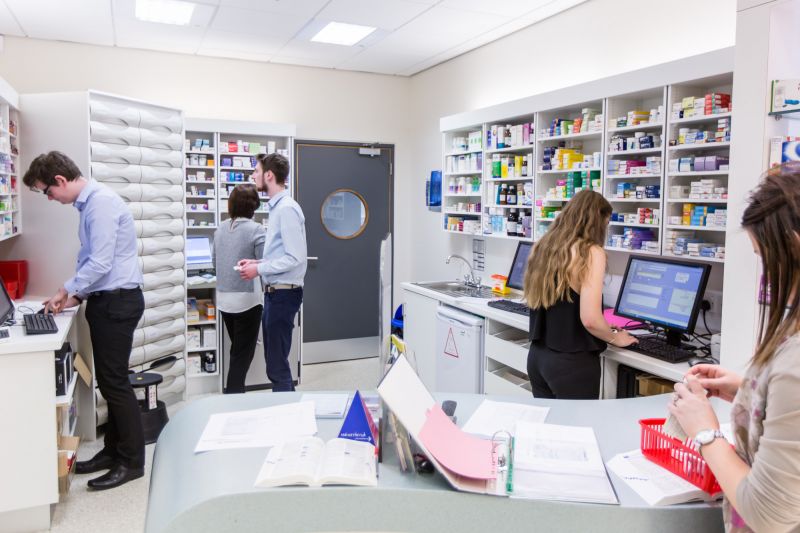
Ulster University is the leading provider of degree apprenticeships in Northern Ireland, with more than 700 apprentices enrolled across approved apprenticeship frameworks.
Degree apprenticeships contribute to sustainability by widening access to higher education through paid study while developing skills directly aligned to labour market and societal needs. By embedding learning within local workplaces, they reduce environmental impacts, strengthen regional economies, and support a more inclusive and resilient education and skills system.


Knowledge Transfer Partnerships
Ulster University’s Knowledge Transfer Partnerships (KTPs) are collaborative projects that bring together academic expertise, industry partners, and skilled graduates to drive innovation with real-world impact. Many Ulster KTPs directly support sustainability by helping organisations improve environmental performance, reduce waste, and develop more efficient and low-carbon processes.
- A KTP with Inspire Workplaces developed a digital wellbeing platform that improves access to mental health support, supporting social sustainability and healthier workplaces .
- A KTP with Rapid International Ltd focused on introducing more environmentally friendly practices and reducing waste through engineering innovation .
- A KTP with Seating Matters demonstrated how academic collaboration can embed new capabilities in businesses and deliver measurable social impact at scale
- A KTP with James Leckey Design focused on advancing design and manufacturing processes for assistive seating products, improving efficiency and supporting more sustainable production practices while enhancing product quality and innovation.

Funded Scholarships
Ulster University offers a range of scholarships to support students throughout their academic journey. Through both needs- and merit-based programmes, we aim to increase access and reward excellence, empowering students to reach their full potential.
Funded scholarships contribute to sustainability by removing financial barriers, widening participation, and promoting social mobility for underrepresented groups. By investing in talent and long-term skills development, they strengthen economic resilience, foster equitable opportunities, and support a more inclusive and sustainable higher education system.

Discovery Academy
The Ulster University Schools Discovery Academy is an award-winning, fully inclusive virtual learning environment designed to inspire curiosity, demystify higher education, and support informed decision-making among school pupils.
Co-designed by Educational Outreach Officers and academic staff across all four faculties, it draws on Ulster University’s teaching, research, and professional expertise to deliver engaging content for pupils from Years 8–14.
The Discovery Academy contributes to sustainability by widening access to higher education, engaging learners early and equitably, and helping to build aspiration while reducing educational inequalities.

Connected to the Community Campaign
At Ulster University, our mission is to drive positive change, foster a rich cultural landscape, and create lasting impact. Through the ‘Connected to the Community’ campaign, our partnerships with local stakeholders help transform the North West into a vibrant hub of culture and innovation, supporting events such as the City of Derry Jazz & Big Band Festival, Foyle Maritime Festival, Halloween, and Foyle Film Festival.
The campaign contributes to sustainability by strengthening cultural, social, and economic vitality, fostering community cohesion, regional identity, and long-term, resilient local development.
Manchester United Foundation
Ulster University’s Educational Partnerships with schools aim to widen participation and raise attainment in post-primary education, preparing young people for progression to higher-level learning.
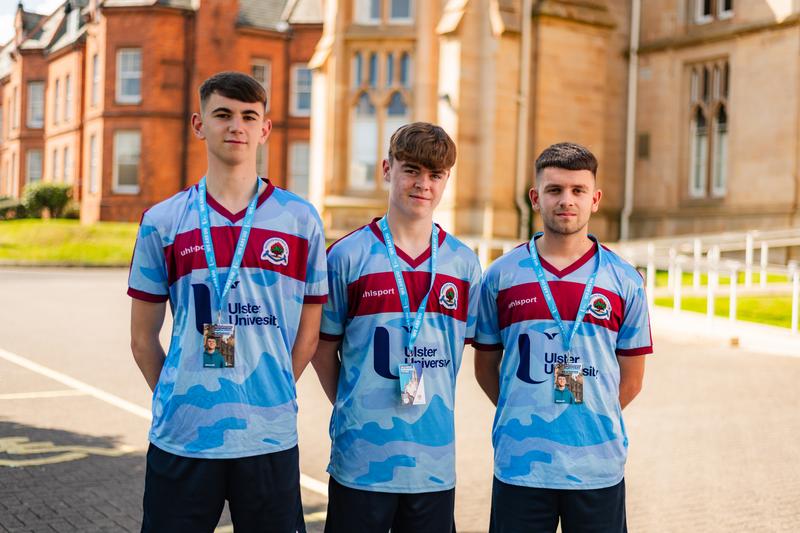
In partnership with the Manchester United Foundation, this work uses the power of football to engage and inspire young people across the Foyle Learning Community.
The partnership contributes to sustainability by promoting equitable access to education, supporting positive life outcomes, and fostering social inclusion and stronger, more cohesive communities.
Ulster Screen Academy
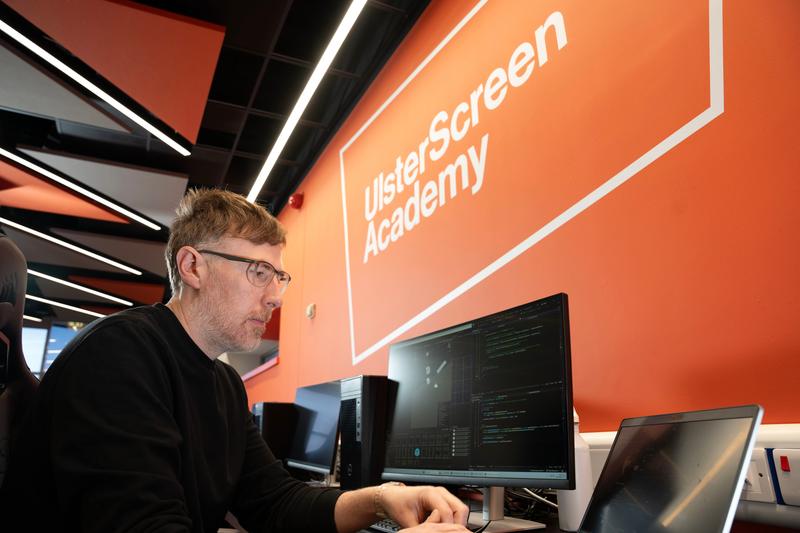
Bringing together Northern Ireland’s leading talent in screen production, animation, games, photography, and creative design, the Ulster Screen Academy is a driving force behind the region’s rapidly growing screen industry.
Led by a world-class academic team, the Academy delivers innovative, industry-relevant courses that produce highly skilled, award-winning graduates ready to succeed in one of the fastest-growing sectors of the economy.
The Ulster Screen Academy contributes to sustainability by developing talent and industry-ready skills that support the long-term growth and resilience of Northern Ireland’s creative and screen industries. By aligning world-class teaching with industry demand, it strengthens economic sustainability, fosters high-quality employment, and nurtures a thriving regional creative economy.
EPIC Futures NI
EPIC Futures NI (Economic and Social Partnering for Inclusive Innovation and Collaboration) is a Local Policy Innovation Partnership led by Ulster University and funded by ESRC, AHRC, Innovate UK, and UKRI.
Bringing together government departments and a wide range of stakeholders, EPIC Futures NI develops evidence-based solutions for fair and inclusive employment across Northern Ireland, addressing data and knowledge gaps on economic inactivity, unemployment, underemployment, and hidden unemployment to inform effective policies and programmes.
The partnership contributes to sustainability by tackling labour market inequalities, promoting social justice, and supporting long-term economic resilience and sustainable workforce development.

Belfast Region City Deal
City Deals are bespoke funding packages agreed between central government and the region, designed to attract additional investment, create new jobs, and accelerate inclusive economic growth.
Our City Deal projects contribute to sustainability by promoting equitable economic growth, generating high-value employment, and developing a skilled, future-ready workforce. By advancing healthcare, digital technologies, and advanced manufacturing, these initiatives strengthen regional innovation, enhance social outcomes, and support long-term economic and community resilience.
The Centre for Digital Healthcare Technology
The Centre for Digital Healthcare Technology (CDHT) aims to transform healthcare through cutting-edge digital solutions, providing a collaborative hub for academia, industry, and clinicians to accelerate the development of medical devices and diagnostics.
By addressing the challenges of an ageing population and growing pressure on healthcare services, CDHT is expected to deliver substantial regional economic benefits, including the creation of 1,240 jobs.
Advanced Manufacturing Innovation Centre
The Advanced Manufacturing Innovation Centre (AMIC), led by Queen’s University Belfast in partnership with Ulster University, industry, and local government, and supported by the UK Government and NI Executive, is an open-access innovation hub featuring state-of-the-art facilities.
Its 10,500m² Factory of the Future provides the advanced manufacturing, materials, and engineering sectors with access to cutting-edge technologies, driving industrial transformation, addressing future skills needs, and enhancing Northern Ireland’s global competitiveness.
Derry City and Strabane City Deal
Cognitive Analytics and Digital Robotics Innovation Centre
The Cognitive Analytics and Digital Robotics Innovation Centre (CADRIC) is a purpose-built facility supporting the Cognitive Analytics Research Laboratory (CARL) and the Centre for Industrial Digitalisation, Robotics and Automation (CIDRA).
CADRIC will develop a skilled talent pipeline, drive world-leading research and innovation, attract Foreign Direct Investment, and foster collaborative partnerships. It will promote inclusive economic growth and job creation, establishing the Derry City & Strabane District as a global hub for innovative technologies such as bio-inspired AI and cognitive robotics.
School of Medicine
The School of Medicine attracts graduates from diverse disciplines to study medicine and live in the North West, with the aim of retaining them as doctors in the region.
It trains the next generation of doctors to provide skilled, compassionate, whole-person care and meet Northern Ireland’s future healthcare workforce needs.
Phase 2 includes new teaching and research facilities at the Derry~Londonderry campus, the MedEdWest teaching facility at Altnagelvin Hospital, and an extension to the Clinical Translational Research Centre (C-TRIC) at Altnagelvin.
Causeway Coast & Glens Growth Deal: Centre for Food & Drug Discovery
The Centre for Food & Drug Discovery, part of the Causeway Coast & Glens Growth Deal, is a major innovation project based in Coleraine that expands Ulster University’s research and innovation capacity. Drawing on world-class expertise in biomedical sciences and nutrition, the centre serves as a one-stop facility for the drug discovery and food innovation pipeline, accelerating development, testing, and market introduction to improve population health.
The Centre contributes to sustainability by advancing public health through innovation, preventing disease, and enhancing wellbeing. By strengthening research capacity and fostering collaboration with industry, it supports economic resilience, drives knowledge-based growth, and develops a skilled, future-ready workforce, while promoting long-term social and community wellbeing.
Studio Ulster
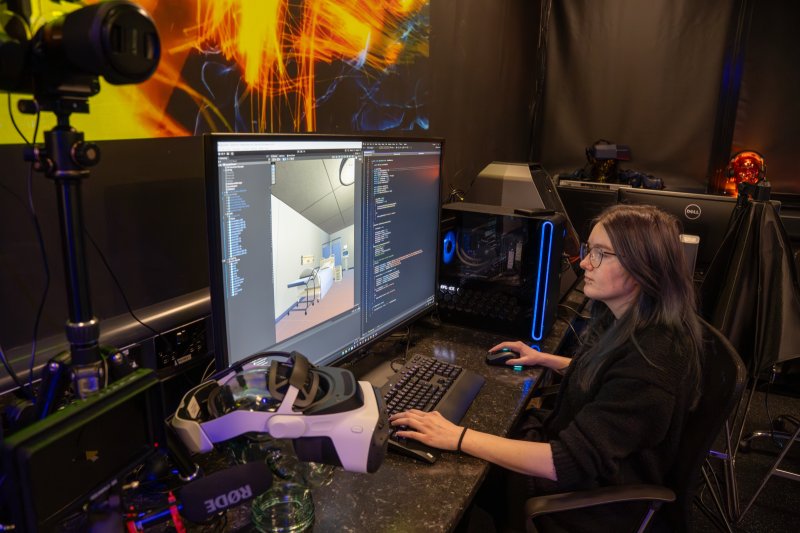
Developed by Ulster University in partnership with the Belfast Harbour Commission and supported by Northern Ireland Screen, Studio Ulster is a large-scale virtual production studio complex in Belfast.
Featuring world-class stages and an integrated Research, Development, and Innovation Centre of Excellence, it collaborates with global production companies and university teams to address the virtual production skills gap and train highly skilled graduates.
The facility also provides local creative companies with access to advanced technology, helping them enhance products, scale up, and compete globally.
Studio Ulster contributes to sustainability by developing a skilled, future-ready creative workforce and fostering collaboration between industry, academia, and local businesses.
By driving innovation, strengthening the regional creative economy, and enhancing economic resilience, it supports long-term social and economic sustainability while boosting Northern Ireland’s global creative competitiveness.
CoSTAR Screen Lab
The CoSTAR Screen Lab, based at Studio Ulster, is the UK’s R&D network for creative technology. Funded by the AHRC as part of UK Research and Innovation, it aims to shape the future of the UK’s creative industries by driving world-class research and development in screen and performance. The lab operates under three guiding principles: place and potential, equality, diversity and inclusion (EDI), and environmental sustainability through open innovation.
CoSTAR Screen Lab contributes to sustainability by advancing innovation and skills in the creative industries while promoting inclusive and equitable participation. Its focus on environmentally sustainable practices encourages resource-efficient and responsible technology development, strengthening the social, economic, and environmental resilience of both regional and national creative sectors.

Shared Island Fund: Teaching and Student Centre
In partnership with the Irish Government, Ulster University is expanding higher education on both sides of the border with a new teaching and student services block.
The facility will provide additional lecture, seminar, and social spaces, freeing up other buildings for teaching and research, and creating a vibrant campus in Derry~Londonderry that fosters creativity, innovation, and transformative learning while enhancing research and community engagement.
This development contributes to sustainability by expanding access to higher education, improving learning environments, and fostering social and educational inclusion.
By strengthening teaching, research, and community engagement, it builds human capital and knowledge development, while promoting long-term social and economic sustainability through a dynamic, innovative campus that attracts and retains students and staff and supports regional growth.

PEACEPLUS: Northland Dome
The Northland Dome is a 15,000m² indoor sports and leisure arena in Derry~Londonderry, developed by Ulster University in partnership with PEACEPLUS.
As a first-of-its-kind facility in Northern Ireland, it transforms the former Foyle College site into a shared sporting and events space, featuring full-size pitches for football, Gaelic games, and rugby, alongside venues for community and cultural activities.
Connected to Ulster University’s campus via a recreational trail, the Dome will serve as a major community hub with capacity for thousands of spectators.
The Northland Dome contributes to sustainability by promoting social and community wellbeing through inclusive access to sports, leisure, and cultural events.
By repurposing a former site into a multi-use facility, it encourages healthy lifestyles, community engagement, and social cohesion. Its integration with campus and local infrastructure further strengthens regional development, supports long-term economic resilience, and fosters vibrant, sustainable community spaces.

Timber Quay & Queens Quay
In partnership with the Department for the Economy, Ulster University has acquired land to support the expansion of its Derry~Londonderry campus, enabling growth to 10,000 students.
Rapid increases in student numbers have brought the campus to full capacity, creating the need for additional space. One of the acquired sites, Timber Quay, has been transformed into modern computing laboratory-based teaching and learning facilities for students in the School of Computing, Engineering, and Intelligent Systems.
From early 2026, a second phase will provide additional teaching space in time for the September intake, while further land secured around Queen’s Quay will support future expansion.
The campus expansion contributes to sustainability by increasing access to higher education and accommodating a growing, diverse student population, fostering social and educational inclusion.
By delivering purpose-built teaching and laboratory facilities, it enhances learning, research, and workforce skills, strengthening human capital and knowledge development.
The project also supports long-term social and economic sustainability by driving regional growth, attracting and retaining talent, and creating adaptable infrastructure that meets future educational and community needs.

Atlantic Futures
The Atlantic Futures is a four year cross-border research project between Atlantic Technological University, Ulster University, University of Galway and University of Limerick.
The Partnership
- CREATES a research team organised in three co-located hubs Derry/Londonderry, Galway, Limerick.
- DEVELOPS a national resource on the scale and with similar ambition to the Edinburgh Futures Institute.
- UNITES both strategic and basic research strategies and deploys a variety of methodologies, including GEM, science studies, behavioural science, action research, critical feminist studies, citizen research, patient participant enquiry, and a variety of methodologies from economics and management.
This project supports sustainability by fostering cross-border collaboration in research and knowledge creation, strengthening social, educational, and institutional networks across Northern Ireland and the Republic of Ireland, generating insights to guide policy, and creating resources that support resilient, innovative communities.
By uniting strategic and basic research across diverse disciplines and methodologies, it enhances evidence-based decision-making, promotes inclusive participation, and builds capacity for addressing complex societal challenges.

Kainos Ulster University Awards for Women In Computing
The Kainos Ulster University Awards for Women in Computing, developed in partnership with leading tech company Kainos, aim to encourage and support women pursuing careers in computing while promoting diversity in the tech sector.
The awards provide financial support, mentoring, networking opportunities, and industry engagement, equipping students with the skills, confidence, and connections to succeed. Recipients gain first-hand insights into tech careers, collaborate with industry leaders, and help shape the future of the sector.
The awards contribute to sustainability by promoting social and economic inclusion in technology, addressing gender imbalance, and widening participation in computing careers.
By developing a skilled, confident, and diverse workforce, they strengthen the regional and national tech ecosystem, foster long-term economic resilience, and support more equitable and inclusive social outcomes.

Randox Student Sport Sponsorship
Randox, a global leader in in vitro diagnostics, sponsors Ulster University Sports to foster talent and support young athletes. Providing kit and equipment to over 70 sports clubs across all four campuses—including basketball, GAA, hockey, football, and athletics—Randox has also funded world-class performance analysis equipment to enhance student-athlete training and development.
The sponsorship contributes to sustainability by promoting social inclusion, wellbeing, and healthy lifestyles through broad access to sport. By equipping student-athletes with advanced resources, it develops skills, confidence, and potential, strengthening human capital. The initiative also supports long-term social and economic sustainability by fostering community engagement, teamwork, and a vibrant, active campus culture.