Start Year:
2027/28

Community Development BSc (Hons)

Undergraduate Part-time 2027/28

Supporting you to develop professional community development practice in order to transform communities.

  • Qualification Type(s)
    Bachelor of Science with Honours

  • Location
    Belfast

  • Start Date
    September 2027

  • Study Mode
    Part-time

  • Professional Recognition
    Industry Endorsed

Overview

This is the only 3rd level qualification in the United Kingdom and Republic of Ireland which provides you with a specialised degree in Community Development. Endorsed by professional bodies in both jurisdictions, the course will enable you to gain employment in a wide range of settings across the community/voluntary sector and public sector, e.g. local councils, health trusts.

You will have the opportunity to gain high level skills to work effectively in communities, to empower those without a voice in a society, to bring about social change, build capacity and improve the quality of life in disadvantaged and marginalised communities.

We’d love to hear from you!

We know that choosing to study at university is a big decision, and you may not always be able to find the information you need online.

Please contact Ulster University with any queries or questions you might have about:

  • Course specific information
  • Fees and Finance
  • Admissions

For any queries regarding getting help with your application, please select Admissions in the drop down below.

For queries related to course content, including modules and placements, please select Course specific information.

We look forward to hearing from you.

About this course

You will be introduced to a core body of knowledge and debate on issues relating to inequality and social injustice. You will have an opportunity to explore local and international contexts, in order to gain critical awareness of the role which community development can play in tackling inequality, socio-economic disadvantage and marginalisation across the world. In addition, the course examines the role which community development plays in societies transitioning from conflict, through local and international examples. Modules draw on experience and scholarship from elsewhere in Ireland, England, Scotland, Wales, and Europe as well as developments in other urban, post-conflict societies.

You will be encouraged to put knowledge and skills into practice through engagement in critical reflective practice. The course makes links between theory and practice throughout the modules and you will frequently be asked to draw on your own knowledge and experience, to understand challenge current theories, policies and practice. You will also be equipped with the skills required to engage in community development work, including community engagement, group-work, collaborative working, community learning, good governance and organisational development. In the final year, you will have an opportunity to select a practice project of your choice, related to community development.

Recognising that community development work occurs in multi-disciplinary settings, the course provides students with opportunities to learn alongside those specialising in youth work. Modelled on best community education practice, active participatory learning forms the core teaching practice on this course.

Attendance

Attendance is part-time. Students normally attend one day per week 9:30am - 4:30pm over four years throughout this academic year. Study day will change according to the year of entry.

Start dates

  • September 2027

Teaching, Learning and Assessment

Academic Delivery and Award Information

The content for each course is summarised on the relevant course page, along with an overview of the modules that make up the course.

Each course is approved by the University and meets the expectations of:

Attendance and Independent Study

As part of your course induction, you will be provided with details of the organisation and management of the course, including attendance and assessment requirements - usually in the form of a timetable. For full-time courses, the precise timetable for each semester is not confirmed until close to the start date and may be subject to some change in the early weeks as all courses settle into their planned patterns. For part-time courses which require attendance on particular days and times, an expectation of the days and periods of attendance will be included in the letter of offer. A course handbook is also made available.

Courses comprise modules for which the notional effort involved is indicated by its credit rating. Each credit point represents 10 hours of student effort. Undergraduate courses typically contain 10, 20, or 40 credit modules (more usually 20) and postgraduate courses typically 15 or 30 credit modules.

The normal study load expectation for an undergraduate full-time course of study in the standard academic year is 120 credit points. This amounts to around 36-42 hours of expected teaching and learning per week, inclusive of attendance requirements for lectures, seminars, tutorials, practical work, fieldwork or other scheduled classes, private study, and assessment. Teaching and learning activities will be in-person and/or online depending on the nature of the course. Part-time study load is the same as full-time pro-rata, with each credit point representing 10 hours of student effort.

Postgraduate Master’s courses typically comprise 180 credits, taken in three semesters when studied full-time. A Postgraduate Certificate (PGCert) comprises 60 credits and can usually be completed on a part-time basis in one year. A 120-credit Postgraduate Diploma (PGDip) can usually be completed on a part-time basis in two years.

Class contact times vary by course and type of module. Typically, for a module predominantly delivered through lectures you can expect at least 3 contact hours per week (lectures/seminars/tutorials). Laboratory classes often require a greater intensity of attendance in blocks. Some modules may combine lecture and laboratory. The precise model will depend on the course you apply for and may be subject to change from year to year for quality or enhancement reasons. Prospective students will be consulted about any significant changes.

Assessment

Assessment methods vary and are defined explicitly in each module. Assessment can be a combination of examination and coursework but may also be only one of these methods. Assessment is designed to assess your achievement of the module’s stated learning outcomes.  You can expect to receive timely feedback on all coursework assessments. This feedback may be issued individually and/or issued to the group and you will be encouraged to act on this feedback for your own development.

Coursework can take many forms, for example: essay, report, seminar paper, test, presentation, dissertation, design, artefacts, portfolio, journal, group work. The precise form and combination of assessment will depend on the course you apply for and the module. Details will be made available in advance through induction, the course handbook, the module specification, the assessment timetable and the assessment brief. The details are subject to change from year to year for quality or enhancement reasons. You will be consulted about any significant changes.

Normally, a module will have 4 learning outcomes, and no more than 2 items of assessment. An item of assessment can comprise more than one task. The notional workload and the equivalence across types of assessment is standardised. The module pass mark for undergraduate courses is 40%. The module pass mark for postgraduate courses is 50%.

Calculation of the Final Award

The class of Honours awarded in Bachelor’s degrees is usually determined by calculation of an aggregate mark based on performance across the modules at Levels 5 and 6, (which correspond to the second and third year of full-time attendance).

Level 6 modules contribute 70% of the aggregate mark and Level 5 contributes 30% to the calculation of the class of the award. Classification of integrated Master’s degrees with Honours include a Level 7 component. The calculation in this case is: 50% Level 7, 30% Level 6, 20% Level 5. At least half the Level 5 modules must be studied at the University for Level 5 to be included in the calculation of the class.

All other qualifications have an overall grade determined by results in modules from the final level of study.

In Masters degrees of more than 200 credit points the final 120 points usually determine the overall grading.

Figures from the academic year 2022-2023.

Academic profile

The University employs over 1,000 suitably qualified and experienced academic staff - 60% have PhDs in their subject field and many have professional body recognition.

Courses are taught by staff who are Professors (19%), Readers, Senior Lecturers (22%) or Lecturers (57%).

We require most academic staff to be qualified to teach in higher education: 82% hold either Postgraduate Certificates in Higher Education Practice or higher. Most academic and learning support staff (85%) are recognised as fellows of the Higher Education Academy (HEA) by Advance HE - the university sector professional body for teaching and learning. Many academic and technical staff hold other professional body designations related to their subject or scholarly practice.

The profiles of many academic staff can be found on the University’s departmental websites and give a detailed insight into the range of staffing and expertise.  The precise staffing for a course will depend on the department(s) involved and the availability and management of staff.  This is subject to change annually and is confirmed in the timetable issued at the start of the course.

Occasionally, teaching may be supplemented by suitably qualified part-time staff (usually qualified researchers) and specialist guest lecturers. In these cases, all staff are inducted, mostly through our staff development programme ‘First Steps to Teaching’. In some cases, usually for provision in one of our out-centres, Recognised University Teachers are involved, supported by the University in suitable professional development for teaching.

Figures from the academic year 2022-2023.

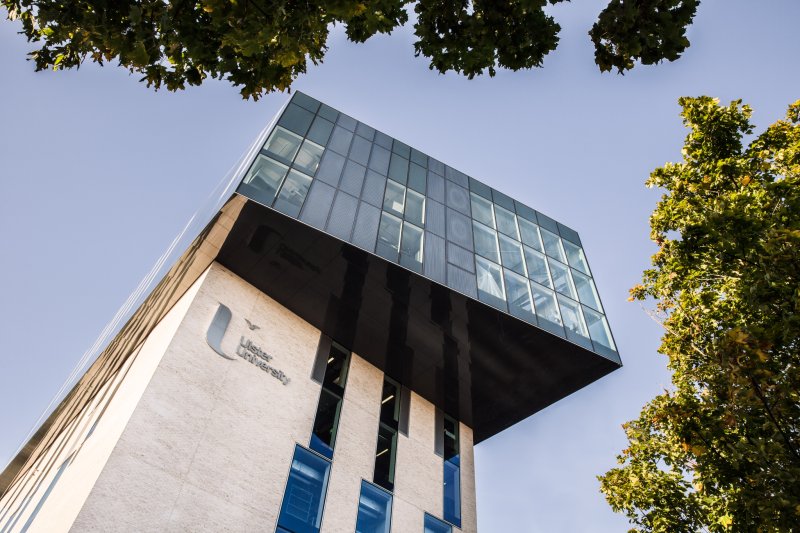
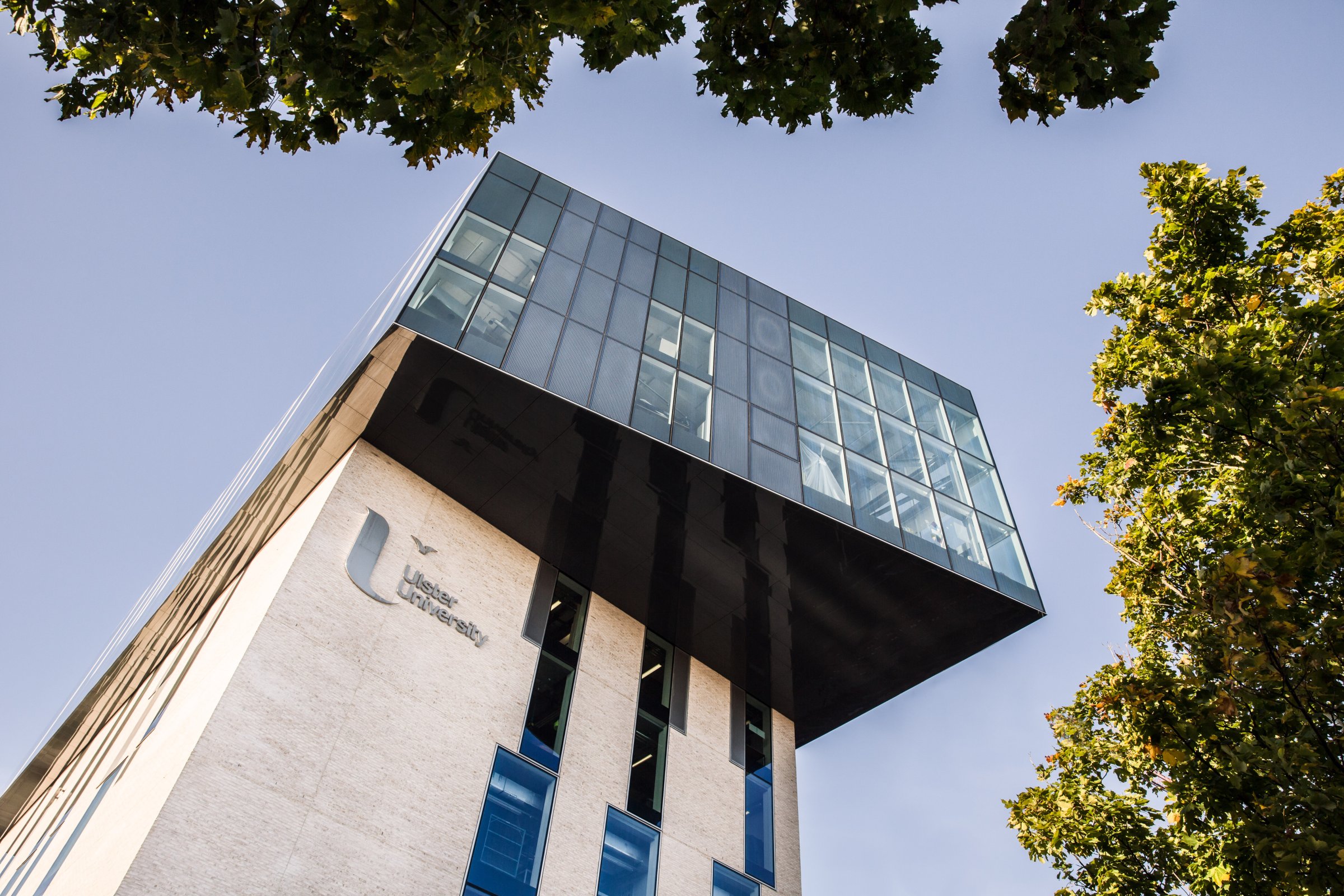
Belfast

Delivering a city university experience, we are located within Belfast's Cathedral Quarter, the cultural centre of the city.

City Living

Belfast is a walkable city. Designed for sustainable travel, our Belfast location can be easily accessed from the surrounding neighbourhoods via foot, bike, public transportation, or road links to towns throughout Northern Ireland.

Belfast is home to a bustling social and cultural scene, both indoors and outdoors. Recognised with Purple Flag status for its safe, vibrant nightlife, Belfast offers an exciting mix of food, music and craic that attracts millions of visitors each year. Belfast's history, present and future is captured from each window of our state-of-the-art campus, with University sports facilities close by. Get a feel for student life beyond the campus on the Destination Belfast guide

Modules

Here is a guide to the subjects studied on this course.

Courses are continually reviewed to take advantage of new teaching approaches and developments in research, industry and the professions. Please be aware that modules may change for your year of entry. The exact modules available and their order may vary depending on course updates, staff availability, timetabling and student demand. Please contact the course team for the most up to date module list.

Year one

Participatory approaches to engaging communities

Year: 1

This module enables students to gain an understanding of sound ethical social research principles, and develop skills in conducting basic community research, using innovative participatory and empowering methodologies. Students will be able to utilise knowledge and skills gained from this module to work collectively in their communities, to increase community capacity to influence policy and decision-making and drive sustainable development.

Understanding Community and Community Development

Year: 1

This module enables students to gain knowledge and understanding of the contested and often complex concept of community; be introduced to the values of community development and the AIEB All-Ireland Standards for Community Work; apply and align these values to their own professional practice; and be introduced to the concept of social capital and learn how to apply this learning in a community development setting. The skills developed in this module will provide foundational learning around key concepts and prepare students for future modules and their own individual practice.

Key Issues in Community Development

Year: 1

Understanding the key issues faced by a community is a critical first step in formulating (values-informed) community development responses. The foundation for such understanding is an awareness of the structural drivers of disadvantage such as poverty and inequality - in addition to learning around the philosophies of individualism and collectivism, and the sociological worldviews of functionalism and collectivism which frame the debates around poverty and inequality. This module will also equip students with important practice skills around researching, collating, and presenting important community information. The knowledge and practice skills developed in this module will help students identify, understand, and respond to emergent and long-standing issues in their community development practice settings.

Reflective Workbook One

Year: 1

This workbook is designed to foster meaningful reflection and deeper learning by guiding students through each module with purpose. It provides structured opportunities for learners to monitor their progress, reinforce understanding of essential theories and principles, and thoughtfully engage with academic material. By encouraging students to link core concepts to both personal and professional experiences, the workbook helps bridge the gap between theory and practice—empowering students to gain insights that are both relevant and transformative in their community practice

Developing Interpersonal Competence for Community Capacity Building

Year: 1

Community development practitioners advocate for vulnerable individuals and grassroots initiatives, using communication and negotiation skills to promote sustainable futures. To be effective, they must upskill, build collaborative relationships, and develop interpersonal competence. Their work requires empathy, active listening, and cultural sensitivity to foster trust and create inclusive initiatives. This module prepares students to support meaningful change in diverse communities, focusing on strong communication, relationship-building, confidence in social interactions, cultural awareness, problem solving, and facilitation skills.

Year two

In Situ Practice Placement

Year: 2

This module aims to introduce students to national occupational standards in community development, to give students the opportunity to reflect on issues of professionalism and to pinpoint areas for professional development. It enables students to gain skills in critical reflection necessary and to practice these skills in order to develop reflective practice.

Reflective Workbook Two

Year: 2

This reflective workbook invites students to deepen their journey of growth by revisiting earlier insights and critically examining how their values, skills, and perspectives have evolved. It encourages greater ownership of personal development, fostering independent thinking and self-awareness. Through structured reflection, community engagement, and peer feedback, learners are empowered to shape inclusive environments and articulate their growth in a final reflective essay.

Community Empowerment and Collectivity: applying these values in practice

Year: 2

This module equips students with the knowledge and skills to build effective participation within the community, in order to create sustainable positive change through critical consciousness raising and collective action.

Networking and capacity-building: increasing community participation

Year: 2

This module provides students with core knowledge and skills in engaging with marginalised, disadvantaged communities, in order to increase their capacity to participate and effect decisions impacting their community.

Introduction to politics and social policy for community workers

Year: 2

This module will enhance students' understanding of the impact of politics and social policy in the communities of their community development practice, and the often complex relationships between politics, social policy and the practice of community development - this will help practitioners affect positive change in their communities of practice, and better enable them to encourage local residents to participate in democratic and decision-making processes.

At a more localised level, this module will also equip student with the knowledge and skills to design and deliver community development responses to conflict legacy issues such as sectarianism, segregation and fractured community relations at a local level - thus building on the practice's proud tradition in Northern Ireland / the North of Ireland of mediating the impact of the conflict and promoting reconciliation in communities, particularly those most affected by the conflict.

Year three

Ex-Agency Placement

Year: 3

This module will give students the opportunity to explore how they can critically reflect on and develop their professional understanding through critical thinking and engagement within a community development practice situation that has a different focus than their working environment. This module will allow students the opportunity to investigate emerging and contemporary practices that requires synthesis of main and secondary sources that inform their practice. There will also be an emphasis on students being independent and self-directed learners.

Addressing Local Challenges: recognising and resolving community issues

Year: 3

This module will equip students with the skill set to engage with residents of local communities where they practice and will enable them to analyse local and global economic and environmental issues through the lens of equity and justice and further advance their skills of advocacy and campaigning for social justice. The module provides students with the knowledge and training to educate local residents in raising their critical consciousness of power imbalances and promote sustainable inclusive co created solution focused initiatives to tackle identified challenges. students will be enabled to apply theoretical frameworks to real world local scenarios.

Political Economy, Social Justice and Critical Community Development

Year: 3

This module will develop students' capacity to examine issues of domination and oppression via critical lens. Developing a fuller understanding of social justice, political economy, equality/human rights issues, the social exclusion of marginalised social groups, and the critical dimension of community development practice will enable students to become more effective agents of positive change.

Reflective Workbook Three

Year: 3

Reflective Workbook Three supports students in consolidating their personal and
professional growth by critically engaging with Year Three modules. It encourages
meaningful reflection on academic learning and placement experiences, helping students
integrate new insights with earlier reflections. The workbook fosters deeper self-awareness
and guides students in shaping a confident, coherent professional identity.

Year four

Community Project Management

Year: 4

This module enables students to gain the knowledge and skills required to plan, manage and evaluate a community project. In addition, students will gain awareness of ethical governance and develop an understanding of organisational requirements to ensure community projects comply with relevant organisational and legislative policies and frameworks.

Final Placement

Year: 4

This module aims to equip students equip students with the necessary skills to design and implement a community project or event. Students will have been introduced to the skills and techniques of leading and managing projects in previous modules. This module provides students with the support mechanisms to implement and evaluate a project, critically reflecting on these within a practice placement environment.

Cultural competence and trauma-informed practice for Community Workers

Year: 4

This module enables students to develop skills in cultural competence and trauma-informed practice, which will enable them to work with individuals and communities to promote equality, human rights for all; to build individual and community resilience and promote social justice.

Transformative Leadership for Social Justice Impact

Year: 4

Leadership at the grassroots level is not just about managing local initiatives—it is about inspiring transformation, fostering resilience, and driving social impact from the ground up. By empowering communities, mobilizing collective action, and advocating for equity, grassroots leaders serve as catalysts for sustainable change, ensuring that development is both inclusive and effective.

Reflective Workbook Four

Year: 4

This module enables final-year students to reflect critically on their academic and practical
experiences throughout the Community Development degree. It supports the integration of
theory with practice, encourages personal and professional growth, and helps students
articulate their readiness for future roles in the sector. Through structured reflection,
students develop self-awareness, ethical understanding, and a clear sense of their
professional identity.

Optional Modules

Optional modules are reviewed on a Programme each year and we may change the options available to you, to reflect our staff expertise, changes in Programme requirements or to reflect feedback that we have received from other Students, employers or other interested parties.

If your Programme contains optional modules, you will be provided with a list of these in good time so that you can choose the options right for you each year. Sometimes, we may not be able to run a particular optional module because not enough Students sign up for it or because a member of staff is not available to teach a module. Where this may be the case, we will let you know when you are provided with your option choices, and you will be able to choose an alternative if one of your selected modules does not run.

Standard Entry Conditions

We recognise a range of qualifications for admission to our courses. In addition to the specific entry conditions for this course you must also meet the University’s General Entrance Requirements.

The entry conditions below apply to applicants presenting qualifications from Northern Ireland, the Republic of Ireland or Great Britain.

Entry Requirements

A minimum of passes in five subjects, two of which must be at A level (grades A-E) or equivalent and three at GCSE level* (grades A-C/4-9) or equivalent OR a minimum of four subjects to include three at A level.  We may also take into account relevant work experience.

Ulster are also more than happy to accept different combinations of qualifications, e.g. An A-Level, and two BTECs, or three individual OCR or BTEC qualifications, provided the individual qualifications are accepted and are of the correct size we ask for.

* GCSE English Language (grades A-C/4-9) may be used as part of the GCSE requirement.

GCSE

English Language - GCSE pass at Grade C/4 or above.

Additional Entry Requirements

Preference will be given to those applicants who are currently working or volunteering in the field of community development, undertaking a minimum of 6 hrs per week. Applicants who do not currently meet this requirement but are accepted onto the course, are expected to secure voluntary or paid employment in this field, for a minimum of 6 hrs per week.

Applicants who have significant experience in the field of community development are welcome to apply directly to the university via the university's Accreditation of Prior Learning (APL) procedures.

Exemptions and Transferability Further

Applicants with significant experience in working in or with the community or voluntary sectors may apply for exemption from Level 4. Candidates who submit a satisfactory APL portfolio, are eligible for entry directly to Level 5.

Applicants who have successfully completed the Certificate of Higher Education in Community Development are eligible for direct entry to Level 5.

Applicants who have a qualification equivalent to the Certificate of Higher Education in Community Development are eligible via the university's APL process to apply for direct entry to Level 5.

Careers and Opportunities

Graduate employers

Graduates from this course are now working for:

  • Belfast City Council
  • Department of Social Development
  • Lisburn City Council
  • Northern Ireland Housing Executive
  • Volunteer Now
  • Tada Rural Support Network
  • 5 NI Health & Social Care Trusts

With this degree you could become:

  • Community Engagement Officer
  • Regeneration Manager
  • Community Health Development Manager
  • Community Centre Manager
  • Project Co-ordinator
  • Youth Worker
  • Suicide Bereavement Officer

This professional qualification equips graduates with the skills to work in a wide range of positions within the community and voluntary sectors, as well as in the public sector. Whilst graduates often find employment managing projects and organisations within the community and voluntary sector, increasingly areas of the public sector, including local councils, neighbourhood and rural regeneration, health trusts and allied health professions require expertise knowledge and skills in community development approaches.

The course team encourages further study and we currently co-deliver an MSc Community Planning and Governance. There are also opportunities for doctoral research and we welcome applications from graduates for PhD study.

Work placement / study abroad

There are three work-based, assessed practice modules over a four year period, each of which require approximately 15 hours per week over 20 weeks. Two of these modules will be in students' current work or voluntary community practice. Students will normally undertake one work-based assessed practice in a different context, in order to further develop their skills and understanding of community work in alternate settings. There are opportunities for those who wish, to undertake this placement abroad and the staff team will support students in accessing these opportunities.

The Community Development Team have a wide range of local and international networks, to facilitate students in choosing a suitable placement.

Professional Recognition

Accreditations reflect the excellence of our teaching, research, and knowledge exchange and ensure our programmes realise the highest expectations. By studying at Ulster University you’ll gain insight and be at the forefront of current industry practices, while our many accredited degree programmes open doors to the world’s top professional organisations, making you more attractive to future employers and giving you a competitive edge in the job market.

All Ireland Endorsement Body for Community Work Education and Training (AIEB)

For the purpose of benchmarking community work/development as a profession in its own right requiring specific skills.

Fees and Funding

2027/28 Fees

Undergraduate fees are subject to annual review, 2027/28 fees will be announced in due course.

See our tuition fees page for the current fees for 2026/27 entry.

Find the right scholarship for you

See if you can access financial or other forms of support, including mentorship to excel in your studies.

View available scholarships.

Additional mandatory costs

Students are required to pay any additional costs incurred as part of their Ex-Agency work-based assessed practice, including but not restricted to travel, accomodation, subsistence and child-care. If students undertake placements with children or vulnerable adults, they will be required to undergo police vetting and will be responsible for paying the appropriate fee.

It is important to remember that costs associated with accommodation, travel (including car parking charges) and normal living will need to be covered in addition to tuition fees.

Where a course has additional mandatory expenses (in addition to tuition fees) we make every effort to highlight them above. We aim to provide students with the learning materials needed to support their studies. Our libraries are a valuable resource with an extensive collection of books and journals, as well as first-class facilities and IT equipment. Computer suites and free Wi-Fi are also available on each of the campuses.

There are additional fees for examination resits and library fines. Where a graduation ceremony is part of your course, please be aware that additional fees will apply.

Students choosing a period of paid work placement or study abroad as a part of their course should be aware that there may be additional travel and living costs, as well as tuition fees.

See the tuition fees on our student guide for most up to date costs.

Sustainability

Ulster continues to develop and support sustainability initiatives with our staff, students, and external partners across various aspects of teaching, research, professional services operations, and governance.

At Ulster every person, course, research project, and professional service area on every campus either does or can contribute in some way towards the global sustainability and climate change agenda.

We are guided by both our University Strategy People, Place and Partnerships: Delivering Sustainable Futures for All and the UN Sustainable Development Goals.

Our work in this area is already being recognised globally.  Most recently by the 2024 Times Higher Education Impact rating where we were recognised as Joint 5th Globally for Outreach Activities and Joint Top 20 Globally for Sustainable Development Goal 17:  Partnership for the Goals.

Visit our Sustainability at Ulster destination to learn more about how the University strategy and the activities of Ulster University support each of the Sustainable Development Goals.

Shape a Sustainable Future

Explore cutting-edge solutions to today’s global challenges. From climate change and renewable energy to sustainable leadership, design, and the arts, our programs empower you to make a real impact. Dive into Sustainable Societies and Justice, lead innovation in operations and management, and become part of the next generation driving environmental, social, and cultural change.

Join Ulster University and turn your passion for sustainability into action. Apply today!

Student and Employer Stories

"Support and guidance was very good...the tutors were fantastic and I learned so much from others in the class".

"I did my placement with Community Restorative Justice...I learned so much about human rights....this has guided my career and my post-graduate learning".

"You can get bogged down in your own community...you are with like-minded people all the time. In a mixed group you are likely to be challenged and this makes you question your own biases and prejudices. I must admit I had not sat down and heard the 'other' perspective. I am a lot more confident now in dealing with different views".

"Beforehand, I never felt capable...doing the degree has transformed my confidence...I see posts advertised, now I think 'why not? I could apply for that!'"

"The degree was a challenge alright...but worth it. The qualification opens doors, the learning supports my practice and there are half a dozen of the class I am still in regular contact with".

"I just feel the degre has given me so many career options...and I have made lasting friendships with ones I have met on the course 7 or 8 years ago...we still catch up, the odd email, coffee in town. I have asked for help with funding...and they would ask me".

Terms and Conditions

1. We prepare our prospectus and online information about our courses with care and every effort is made to ensure that the information is accurate. The printed version of the prospectus is, however, published at least a year before the courses begin. Information included in the prospectus may, therefore, change. This includes, but is not limited to changes to the terms, content, delivery, location, method of assessments or lengths of the courses described. Not all circumstances are foreseeable, but changes will normally be made for one of the following reasons:

  • to meet external, professional, or accredited body requirements;
  • to provide for exceptional circumstances due to reasons beyond our reasonable control;
  • to improve or enhance your experience, or to adopt changes recommended in student feedback, with the aim of improving the student experience and/or student outcomes; and/or
  • to ensure appropriate academic standards are met, for example in response to external examiners’ feedback.

2. If there are insufficient enrolments to make a course viable, it may be necessary for the University to withdraw a course. If you have received an offer for a course that we subsequently have to close, we will contact you as soon as possible to discuss alternative courses. If you do not wish to study any alternative courses at the University, you may withdraw your application by informing us by email to admissions@ulster.ac.uk.

3. Please note that the University’s website is the most up-to-date source of information regarding courses, campuses and facilities and we strongly recommend that you always visit the website before making any commitments.

4. We will include a durable PDF when we send you an offer letter which will highlight any changes made to our prospectus or online information about our courses. You should read this carefully and ensure you fully understand what you are agreeing to before accepting a place on one of our courses.

5. The University will always try to deliver the course as described in the durable PDF you receive with your offer letter.

6. At any point after an offer has been made, students will be notified of any course changes in writing (usually by email) as soon as reasonably practicable and we will take all reasonable steps to minimise their impact where possible. The University will, where possible and reasonably practicable, seek the express consent of the student in regard to any changes concerning material or pre-contract information.

7. The University website will be updated to reflect the changed course information as soon as reasonably practicable.

8. If, after due consideration, you decide that you no longer want to study your course or to study at the University because of the changes, you may withdraw your application or terminate your contract with the University. In order to do so, you should notify us in writing by emailing admissions@ulster.ac.uk (and update UCAS if applicable). We will, on request, recommend alternative courses that you could study with us, or suggest a suitable course at an alternative higher education provider.

9. If you do not agree that the changes are fair, you can seek redress under the Student Complaints Procedures.

10. Providing the University has complied with the requirements of all applicable consumer protection laws, the University does not accept responsibility for the consequences of any modification, relocation or cancellation of any course, or part of a course, offered by the University. The University will give due and proper consideration to the effects thereof on individual students and take the steps necessary to minimise the impact of such effects on those affected.

11. The University is not liable for disruption to its provision of educational or other services caused by circumstances beyond its reasonable control providing it takes all reasonable steps to minimise the resultant disruption to such services.

12. The published Academic Calendar sets out the University’s standard teaching, assessment, and vacation periods. These dates do not apply to all programmes. Individual programmes may operate different start dates, teaching periods, assessment schedules, or vacation arrangements, and some may include teaching or assessment outside the standard University terms. This is particularly common for programmes with professional accreditation requirements, clinical or practice‑based teaching, placements, fieldwork, or intensive study blocks. Full‑time 12‑month programmes, particularly postgraduate taught courses, may operate across the full academic year and typically continue through the summer period without a standard vacation break.

Applicants and students should not rely solely on the central academic calendar when making decisions about accommodation, travel, employment, or other commitments. Programme‑specific schedules will normally be confirmed in programme information, offer documentation and programme handbooks.

The University takes reasonable steps to ensure the accuracy of published information but reserves the right to make changes where reasonably necessary, including to maintain academic standards or to comply with regulatory or professional requirements. Where changes materially affect students, the University will take reasonable steps to notify affected students and applicants in advance where possible.

13. Further information can be found in our terms and conditions.

Student Terms and Conditions

The full Student Terms and Conditions is now available.

View Available Scholarships

Delivering Growth and Investment in Northern Ireland