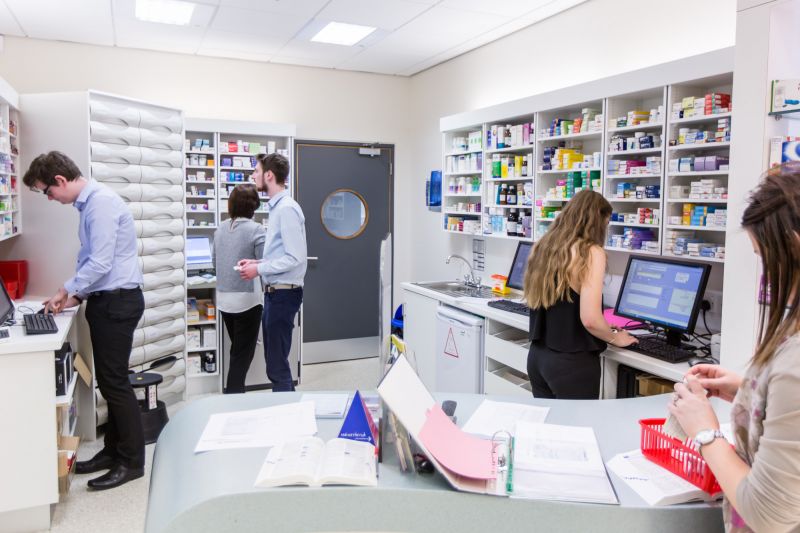




Research by academics at Ulster University and Queen’s University Belfast, in partnership with HSC NI, has underpinned the development of a first-of-its-kind training programme for thousands of health and social care line managers to promote better staff wellbeing and tackle stress-related absenteeism.
The toolkit, developed by academics at the two local universities, will establish new and harmonise existing ‘best practice’ for line managers across the entirety of HSC NI – including the five regional health and social care trusts, the NI Ambulance Service and the Public Health Agency – in a bid to better enable them to prioritise and positively impact staff wellbeing.
HSC NI has seen significant staffing challenges in the past decade, with 8% of HSC working hours lost due to sickness absence (latest figures 2024/25) compared to working-time loss of ~5.2% in NHS England; ~2.9% in the UK public sector; and ~2.0% in the UK workforce overall.
Work-related stress among health and social care workers is cited as one of the leading causes of absence, the researchers found. The resulting pressure on staffing levels has also compounded patient-safety concerns, with average outpatient waiting times at hospitals increasing from 43 to 64 weeks between 2020-2025.
Ulster University’s Professor Paula McFadden, who was the Principal Investigator underpinning the research, said:
“I am delighted that findings from the HSC Workforce Wellbeing and Coping Study are informing Department of Health workforce wellbeing policy and helping managers strengthen their knowledge and skills to support staff through early intervention and prevention.
"Conducted across six phases of the pandemic (2020-2023), the study captured the experiences of more than 14,400 staff. We thank all participants, the wider HSC Workforce team, and especially Dr Schroeder and Dr Currie for their invaluable contribution to the design and implementation of this work.”
HSC NI is the publicly funded system responsible for hospital care, primary care (including GPs), community health, mental health and social-care services for children, families, older people and vulnerable adults.
In NI, it employs 76,855 people spanning clinical doctors, consultants, nurses, social workers and social-care workers as well as administrative, professional and technical staff – with around 8,500 in a line-management role.
The new, online training provides line managers with practical tools, such as the ‘STOP model’ and the ‘Judgment Shift’, to help them make decisions, lead and communicate with compassion and enable the prevention of, and early intervention in, staff wellbeing concerns. The training is due to be embedded in line managers’ inductions and annual training cycles from Autumn 2026.
Ulster University Deputy Director of Research Peter Devine added:
"This programme demonstrates the real-world impact that university research can have when it is developed in close partnership with practitioners and policymakers. The translation into a region-wide training programme is an excellent example of how collaboration between universities, government and the health and social care sector can deliver lasting difference to both staff experience and service delivery.”
One of the leads on the project, Dr Denise Currie of Queen’s Business School at Queen’s University Belfast said:
“Our research established strong links between staff wellbeing and the sustainability of the health and social-care workforce. It highlighted the importance of supportive management practices in shaping employees' day-to-day experiences. The research produced clear guidelines in terms of what works and what doesn’t in employees’ experience of how they’re managed and how this affects their wellbeing.”
Her co-lead, Dr Heike Schroder added:
“We’re now at the stage of translating that research into action. Line managers are a critical, but often overlooked, factor in whether staff feel properly supported. They are the link between an organisation’s mission and what happens ‘on the ground’. Efforts to strengthen and harmonise line-management capability are therefore central to a sustainable workforce. This new training will effectively drive positive culture change within HSC NI.”