


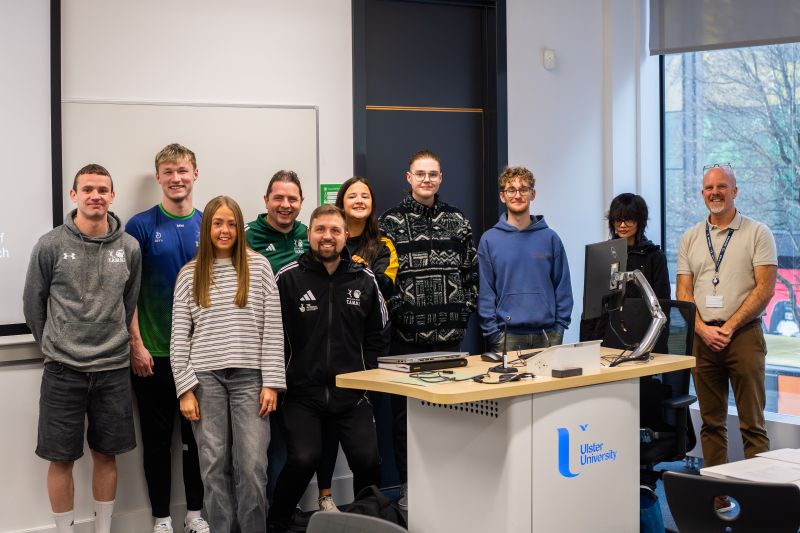
Ulster University students have partnered with two North Belfast schools and community organisations to deliver a creative wellbeing programme combining sport, gaming, creativity and peer mentoring.
The initiative emerged from the University’s ELEVATE Sustainability Sprint, a student-led programme that encourages students to leverage artificial intelligence (AI) to address the challenges faced by community partners and to develop ideas that support sustainability, wellbeing and social impact.
Students from Ulster, led by the winning team from the Business School, worked with pupils from Hazelwood Integrated College and Blessed Holy Trinity College, alongside local mental health charity Tackling Awareness of Mental Health Issues (TAMHI), the Belfast Health and Social Care Trust’s Take Five programme and community organisation 174 Trust.
Together, they developed a series of activities that encouraged young people to think about wellbeing in active, creative and relatable ways, while also building confidence, leadership skills and stronger peer connections. They then used AI to visualise concepts and validate their approaches.
The programme culminated in a special event at Ulster University’s Belfast campus on 20 March, where pupils took part in a range of interactive sessions exploring the connection between sport, gaming, creativity and wellbeing. Through co-creation, these sessions are student-led and more resonant as a result.
Activities included sports challenges in the university sports hall, student-led pitches for wellbeing ideas, demonstrations and game creation leveraging game design principles, and collaborative games focused to encourage deeper participation in the Take 5 initiative as through teamwork and peer support.
A key feature of the project was its ‘mentor the mentor’ approach, where Ulster University students worked alongside sixth-form pupils from both schools, helping them develop leadership skills so they could in turn support younger Year 8 pupils taking part in the activities.
The programme also explored how emerging technologies such as AI can support more creative and human-centred approaches to learning and wellbeing, encouraging students to think about how digital tools can help strengthen collaboration, connection and positive social impact, not detract from it.
Dr John Bustard, Senior Lecturer at Ulster University Business School and lead for the ELEVATE project, said:
“This initiative has been a fantastic example of what can happen when students work collaboratively with schools and community partners to address real-world challenges.
"Our students helped design and deliver activities that encourage creativity, teamwork and positive wellbeing. Seeing younger pupils engage with these ideas and support each other through peer mentoring has been incredibly rewarding.”
Jason Poots from the Belfast Health and Social Care Trust’s Take Five programme said the project highlights the importance of early engagement around mental health and wellbeing. He said:
“Programmes like this help young people understand that wellbeing is something we can all actively support in our daily lives. By bringing together sport, creativity and peer support, this initiative provides a positive and engaging way for pupils to explore the Take Five approach and develop habits that support their mental health.”
Tim Magowan, Director of the 174 Trust, said:
“Working alongside Ulster University, local schools and partner organisations creates powerful opportunities for young people. Initiatives like this help build confidence and resilience while showing pupils that their ideas and voices matter.”
CEO Joe Donnelly from TAMHI mental health charity, highlighted the importance of providing supportive environments where young people can explore wellbeing through creative and interactive activities, saying:
“The programme has been truly groundbreaking. It demonstrates that young people understand what they need to do to support positive mental health and can play a leading role in bringing the Take 5 Steps to Wellbeing to life in meaningful and engaging ways.”
Ulster University student mentor Laura Grehan, who helped develop the programme, said the experience had been particularly rewarding:
“While using AI has been really interesting, the most rewarding part has been the collaboration - working with students from different disciplines, engaging with stakeholders such as TAMHI, and learning from the young mentors from the schools.”
A 6th Year pupil Mentor Mantas Achmetchanovas, from Blessed Trinity, one of the participating schools said the event helped highlight the value of peer led mentoring, saying:
“It’s extremely important just to be able to connect and actually build a relationship with younger people and just be able to mentor and actually give advice to them, as you’ve already been through all of it.”
The ELEVATE Sustainability Sprint Project is part of Ulster University’s wider commitment to student-led innovation and community engagement, enabling students to work collaboratively with partners to create meaningful social impact.