Creative Entrepreneurship

Postgraduate Short course and CPD 20 credit points Part-time 2026/27

Introduce students to entrepreneurship & intrapreneurship with a particular focus on developing sustainable business models in creative industries.

For full instructions on how to apply for short courses, please contact the Centre for Flexible and Continuing Education - FlexEd@ulster.ac.uk

  • Qualification Type(s)
    Contributes to the Postgraduate Certificate of Professional Development.

  • Location
    Belfast

  • Start Date
    25 January 2027

  • Study Mode
    Part-time

Overview

This shor course aims to provide students with an understanding of the role business plays within the creative industries. By focusing on developing students' entrepreneurship awareness it seeks to ensure that they are equipped with the skills needed to establish sustainable creative practices.

QS 5 Star Excellence

Discover Ulster University’s QS 5 Star ratings, a global mark of excellence recognising outstanding achievement across multiple categories.

Rated 5 Stars: Excellent overall

QS Stars

Learn more about QS Stars

We’d love to hear from you!

We know that choosing to study at university is a big decision, and you may not always be able to find the information you need online.

Please contact Ulster University with any queries or questions you might have about:

  • Course specific information
  • Fees and Finance
  • Admissions

For any queries regarding getting help with your application, please select Admissions in the drop down below.

For queries related to course content, including modules and placements, please select Course specific information.

We look forward to hearing from you.

About this course

Rated 5 Stars: Excellent for Teaching

QS Stars

This short course is to introduce students to entrepreneurship and intrapreneurship across a wide range of contexts with a particular focus on developing sustainable business models within the creative industries sector.

The course provides students with an opportunity to acquire and apply a broad range of entrepreneurship skills and covers topics including:

  • Identifying Core Values: Building sustainable businesses built on core motivators.
  • Designing the Future: Using creative envisioning to define evidence of future success.
  • Business Blueprinting: Managing time and modelling business scenarios.
  • Relationship Modelling: Establishing business partnerships and networks.
  • Pitching: Developing the presentation skills required to persuade potential investors.
  • IP and Ethics: Ensuring students are aware of the opportunities that Intellectual Property (IP) affords and stressing the importance of ethics as a core part of design research

Drawing upon NESTA's successful 'Insight Out' programme the short course enhances students' awareness of the range of skills required to embed entrepreneurship within their creative practice.

The focus of the course is on product, service and business development strategy. On completion of the short course, students should have a clear understanding of entrepreneurship and be able to apply their learning to underpin the business development of their product or service.

This course aims:

  • To underline the importance of defining compelling value propositions underpinned by clearly articulated core values.
  • To introduce creative envisioning techniques as a business development tool.
  • To stress the importance of time and resource management through modelling different business scenarios.
  • To demonstrate the role market research and competitor analysis play in establishing business relationships.
  • To develop high-level skills in product and service presentations.

Linked programmes

PG Cert Professional Development, MDes User Experience and Service Design

Assessment

Presentation [60%]

Report [40%]

Attendance

This course requires on-campus attendance at our Belfast campus, during Semester 2, starting January 2027.

* Please note, dates and timetabling are to be confirmed and may be subject to change.

Entry requirements

Applicants must hold a degree (with at least 2:2 Honours standard) or equivalent or demonstrate their ability to undertake the course through the accreditation of prior learning.

The specific requirements for admission are detailed below:

i) Applicants should normally hold a good honours degree in design practice or cognate subject from a University of the United Kingdom or the Republic of Ireland, from the Council of National Academic Awards, the Higher Education and Training Awards Council or from an institution of another country which is recognised as being of an equivalent standard.

ii) Applications are welcomed from diverse backgrounds however, where there is a discipline shift the applicant must represent a coherent rationale for this shift and evidence prerequisite understanding and skills/experience (see below).

iii) Interview by portfolio and proposal. Portfolios must be digital but multiple file types are acceptable (e.g., .pdfs, .docx, .pptx, .jpegs, etc.). Portfolios may also take a variety of forms. For example, if applicants come from a non-design background (e.g., the social sciences), they may use the portfolio to demonstrate research competencies or outline a series of possible projects.

Accreditation of Prior Learning (APL)

The course is devised specifically to support continuing lifelong learning for professions in a rapidly changing field. Therefore APL (Accreditation of Prior Learning) will be considered as evidence of exceptional ability appropriate to recruitment to the programme.

Applications from professionals with extensive professional, industrial and/or commercial experience but lacking recent or higher-level academic qualifications will be encouraged. APL (Advanced Prior Learning) will be considered as evidence of exceptional ability appropriate to the course.

English Language Requirements

Applicants whose first language is not English must meet the minimum English entrance requirements of the University and will need to provide recent evidence of this (certified within the last two years).

Most of our courses require a minimum English level of IELTS 6.0 or equivalent, with no band score under 5.5. Trinity ISE: Pass at level III also meets this requirement.

Additional information on English language requirements for admission at Ulster University, is available at - www.ulster.ac.uk/global/apply/english-language-requirements

Start dates

  • 25 January 2027

Rated 5 Stars: Excellent for Facilities

QS Stars

Belfast

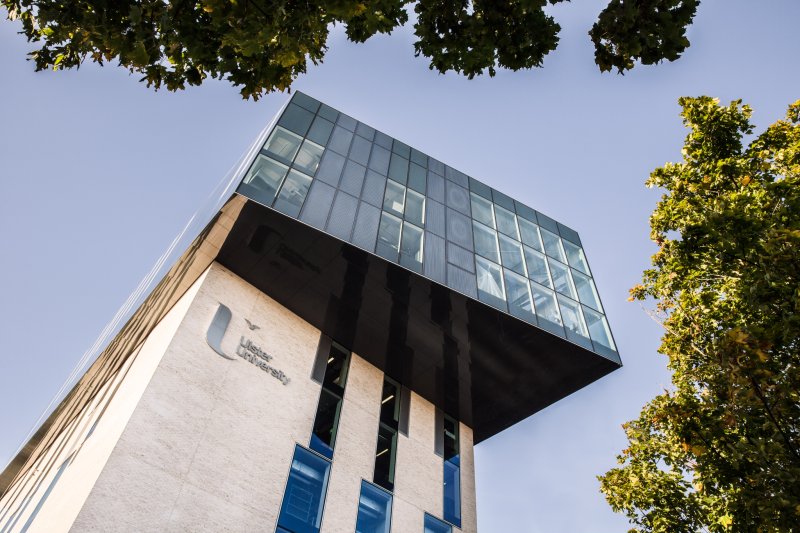
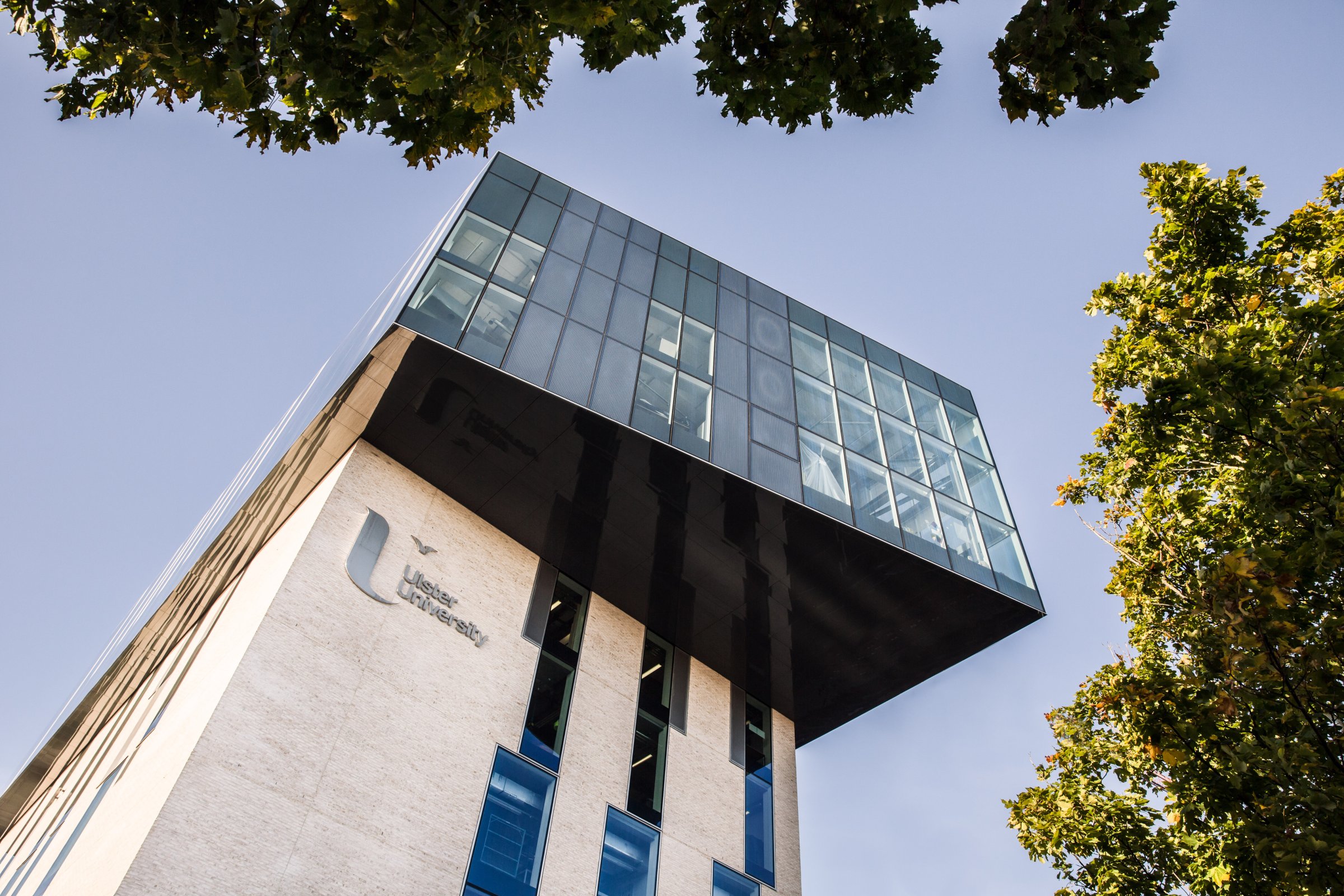
Delivering a city university experience, we are located within Belfast's Cathedral Quarter, the cultural centre of the city.

City Living

Belfast is a walkable city. Designed for sustainable travel, our Belfast location can be easily accessed from the surrounding neighbourhoods via foot, bike, public transportation, or road links to towns throughout Northern Ireland.

Belfast is home to a bustling social and cultural scene, both indoors and outdoors. Recognised with Purple Flag status for its safe, vibrant nightlife, Belfast offers an exciting mix of food, music and craic that attracts millions of visitors each year. Belfast's history, present and future is captured from each window of our state-of-the-art campus, with University sports facilities close by. Get a feel for student life beyond the campus on the Destination Belfast guide

Fees and Funding

2026/27 Fees

See our tuition fees page for the current fees for 2026/27 entry.

Prices

Northern Ireland, Republic of Ireland and EU Settlements Status Fees: £832.20

England, Scotland, Wales and the Islands Fees: £832.20

International Fees: £Not Applicable

Fees information

Payment of Fees and Deposits

Information about how to pay for a course including different payment options is available at - www.ulster.ac.uk/finance/student/tuition-fees-payments

Fees and Funding

Information and advice about course fees and a guide to budgeting for your living costs, as well as sources for financial assistance including hardship funding, scholarships, prizes and awards, is available at - ​www.ulster.ac.uk/student/fees

Annual Fees Increase Disclaimer

Fees illustrated are based on academic year 26/27 entry and are subject to an annual increase.

If your study continues into future academic years your fees are subject to an annual increase. Please take this into consideration when you estimate your total fees for a degree.

Additional mandatory costs are highlighted where they are known in advance. There are other costs associated with university study.

Visit our Fees pages for full details of fees.

Correct at the time of publishing. Terms and conditions apply.

Find the right scholarship for you

See if you can access financial or other forms of support, including mentorship to excel in your studies.

View available scholarships.

Additional mandatory costs

It is important to remember that costs associated with accommodation, travel (including car parking charges) and normal living will need to be covered in addition to tuition fees.

Where a course has additional mandatory expenses (in addition to tuition fees) we make every effort to highlight them above. We aim to provide students with the learning materials needed to support their studies. Our libraries are a valuable resource with an extensive collection of books and journals, as well as first-class facilities and IT equipment. Computer suites and free Wi-Fi are also available on each of the campuses.

There are additional fees for examination resits and library fines. Where a graduation ceremony is part of your course, please be aware that additional fees will apply.

Students choosing a period of paid work placement or study abroad as a part of their course should be aware that there may be additional travel and living costs, as well as tuition fees.

See the tuition fees on our student guide for most up to date costs.

Sustainability

Rated 5 Stars: Excellent for Environmental Impact

QS Stars

Ulster continues to develop and support sustainability initiatives with our staff, students, and external partners across various aspects of teaching, research, professional services operations, and governance.

At Ulster every person, course, research project, and professional service area on every campus either does or can contribute in some way towards the global sustainability and climate change agenda.

We are guided by both our University Strategy People, Place and Partnerships: Delivering Sustainable Futures for All and the UN Sustainable Development Goals.

Our work in this area is already being recognised globally.  Most recently by the 2024 Times Higher Education Impact rating where we were recognised as Joint 5th Globally for Outreach Activities and Joint Top 20 Globally for Sustainable Development Goal 17:  Partnership for the Goals.

Visit our Sustainability at Ulster destination to learn more about how the University strategy and the activities of Ulster University support each of the Sustainable Development Goals.

Contact

For further information please contact us via -

Email: FlexEd@ulster.ac.uk

Telephone: +44 (0) 28 9536 7199

* Please ensure to include your name, email, contact number and the name of the course you are interested in, with your query.

For more information visit

Terms and Conditions

1. We prepare our prospectus and online information about our courses with care and every effort is made to ensure that the information is accurate. The printed version of the prospectus is, however, published at least a year before the courses begin. Information included in the prospectus may, therefore, change. This includes, but is not limited to changes to the terms, content, delivery, location, method of assessments or lengths of the courses described. Not all circumstances are foreseeable, but changes will normally be made for one of the following reasons:

  • to meet external, professional, or accredited body requirements;
  • to provide for exceptional circumstances due to reasons beyond our reasonable control;
  • to improve or enhance your experience, or to adopt changes recommended in student feedback, with the aim of improving the student experience and/or student outcomes; and/or
  • to ensure appropriate academic standards are met, for example in response to external examiners’ feedback.

2. If there are insufficient enrolments to make a course viable, it may be necessary for the University to withdraw a course. If you have received an offer for a course that we subsequently have to close, we will contact you as soon as possible to discuss alternative courses. If you do not wish to study any alternative courses at the University, you may withdraw your application by informing us by email to admissions@ulster.ac.uk.

3. Please note that the University’s website is the most up-to-date source of information regarding courses, campuses and facilities and we strongly recommend that you always visit the website before making any commitments.

4. We will include a durable PDF when we send you an offer letter which will highlight any changes made to our prospectus or online information about our courses. You should read this carefully and ensure you fully understand what you are agreeing to before accepting a place on one of our courses.

5. The University will always try to deliver the course as described in the durable PDF you receive with your offer letter.

6. At any point after an offer has been made, students will be notified of any course changes in writing (usually by email) as soon as reasonably practicable and we will take all reasonable steps to minimise their impact where possible. The University will, where possible and reasonably practicable, seek the express consent of the student in regard to any changes concerning material or pre-contract information.

7. The University website will be updated to reflect the changed course information as soon as reasonably practicable.

8. If, after due consideration, you decide that you no longer want to study your course or to study at the University because of the changes, you may withdraw your application or terminate your contract with the University. In order to do so, you should notify us in writing by emailing admissions@ulster.ac.uk (and update UCAS if applicable). We will, on request, recommend alternative courses that you could study with us, or suggest a suitable course at an alternative higher education provider.

9. If you do not agree that the changes are fair, you can seek redress under the Student Complaints Procedures.

10. Providing the University has complied with the requirements of all applicable consumer protection laws, the University does not accept responsibility for the consequences of any modification, relocation or cancellation of any course, or part of a course, offered by the University. The University will give due and proper consideration to the effects thereof on individual students and take the steps necessary to minimise the impact of such effects on those affected.

11. The University is not liable for disruption to its provision of educational or other services caused by circumstances beyond its reasonable control providing it takes all reasonable steps to minimise the resultant disruption to such services.

12. The published Academic Calendar sets out the University’s standard teaching, assessment, and vacation periods. These dates do not apply to all programmes. Individual programmes may operate different start dates, teaching periods, assessment schedules, or vacation arrangements, and some may include teaching or assessment outside the standard University terms. This is particularly common for programmes with professional accreditation requirements, clinical or practice‑based teaching, placements, fieldwork, or intensive study blocks. Full‑time 12‑month programmes, particularly postgraduate taught courses, may operate across the full academic year and typically continue through the summer period without a standard vacation break.

Applicants and students should not rely solely on the central academic calendar when making decisions about accommodation, travel, employment, or other commitments. Programme‑specific schedules will normally be confirmed in programme information, offer documentation and programme handbooks.

The University takes reasonable steps to ensure the accuracy of published information but reserves the right to make changes where reasonably necessary, including to maintain academic standards or to comply with regulatory or professional requirements. Where changes materially affect students, the University will take reasonable steps to notify affected students and applicants in advance where possible.

13. Further information can be found in our terms and conditions.

Student Terms and Conditions

The full Student Terms and Conditions is now available.

View Available Scholarships

Delivering Growth and Investment in Northern Ireland