


Page content
Monitoring & Reporting
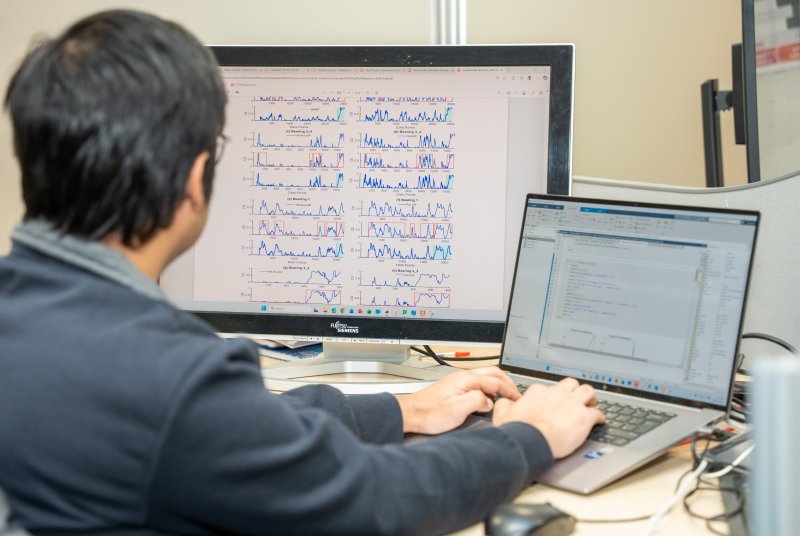
Ulster University Estates Services track our progress regularly through data collection and analysis, enabling targeted actions to improve sustainability. We report on our progress annually via the HESA Estates Management Record and our Annual Sustainability Report. These efforts align with our commitment to a more sustainable future.
Renewable Energy
At Ulster University, we are actively investing in on-site renewable energy generation. We source 100% of our electricity from renewable sources, either generated on-campus or supplied through our electricity provider.
Wind
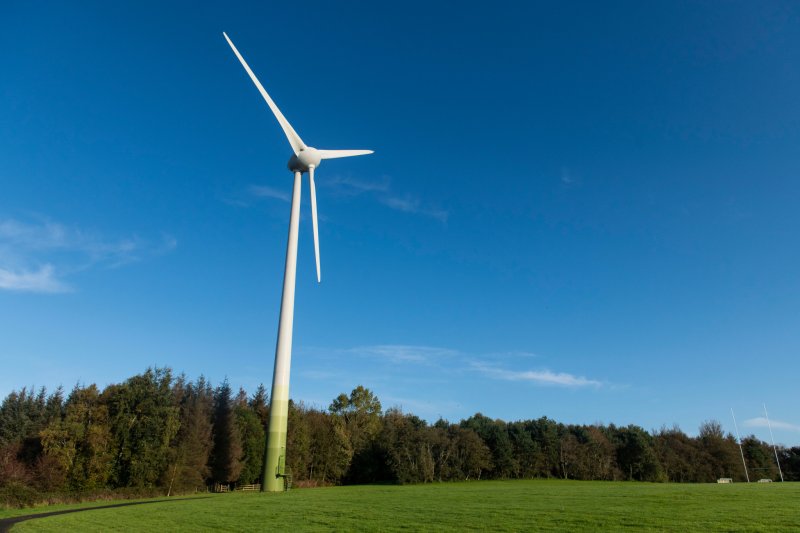
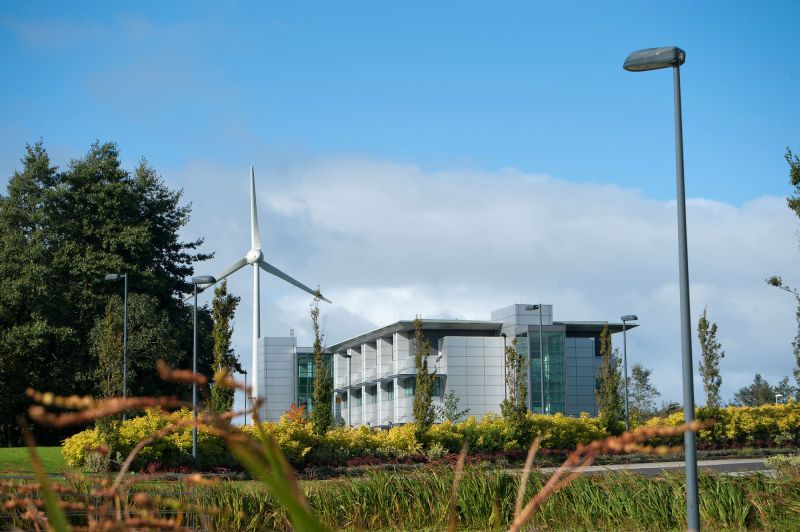
Ulster University was the first educational institution in the UK and Ireland to generate onsite wind energy. Two 800 kW wind turbines at the Coleraine campus generate approximately 2,800 MWh of renewable electricity each year, meeting around 40% of the campus’ total electricity needs.
Solar
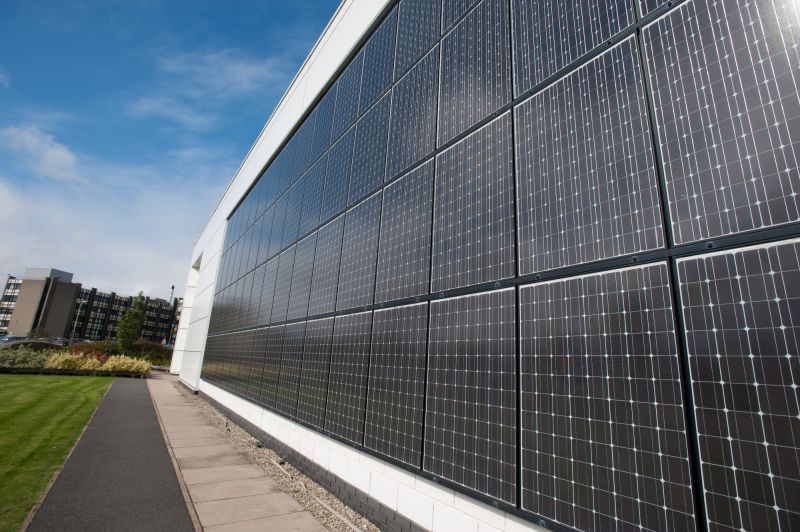
Eight solar PV systems across our campuses provide a combined capacity of 180 kW, producing around 140,000 kWh of electricity annually, equivalent to saving 40 tonnes of carbon.
Ground-source heat pump
A low-carbon heating system is in operation at the High-Performance Sports Centre at the Ulster University Sports Village, using ground-source energy to reduce reliance on fossil fuels.
Energy Efficiency
We are committed to reducing energy consumption across all campuses. From upgrading insulation and lighting to optimising heating and ventilation, we are investing in measures that reduce energy use and carbon emissions.
Upgrading to sustainable technologies
Estates Services are replacing outdated and inefficient equipment with more energy-efficient and low-carbon alternatives. For example, two CHP units installed at the Belfast campus (Block BA) generate both electricity and heat from a single fuel source, improving overall energy efficiency.
Building improvements
Estates Services are enhancing our building fabric (e.g. insulation, windows) and upgrading our Building Management System (BMS) controls to optimise energy use.
Energy monitoring
There are over 500 remotely monitored energy meters installed across all campuses which enable real-time tracking of energy performance and savings. Estates Services are continuing to expand our metering for to help identify inefficiencies and reduce wastage.
Behaviour change
We are promoting energy-saving behaviours through awareness campaigns and communications targeted at staff and students.
Energy audits
Estates Services complete regular energy audits to identify areas of energy waste and highlight opportunities for improving energy performance and reducing carbon emissions.
BREEAM Buildings
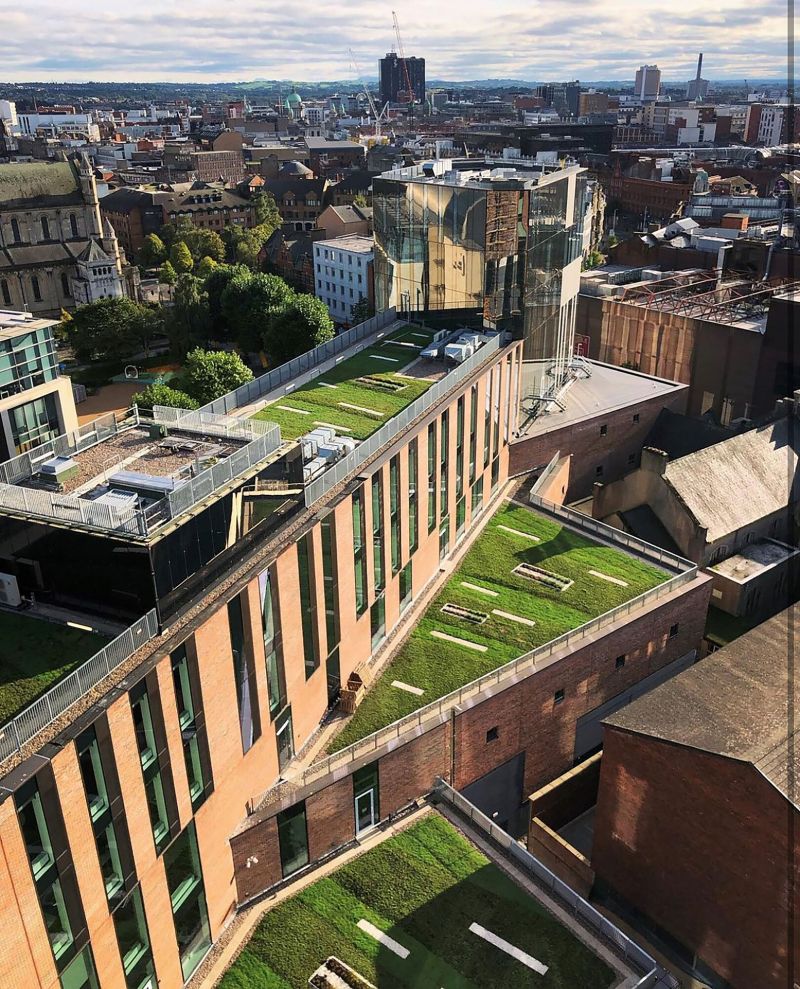
The Building Research Establishment’s Environmental Assessment Method (BREEAM) is widely recognised as the world-leading design and assessment method for sustainable buildings. All Ulster University new builds are designed to achieve BREEAM Excellent ratings, incorporating features like solar panels, natural ventilation, airtight construction, and green roofs.
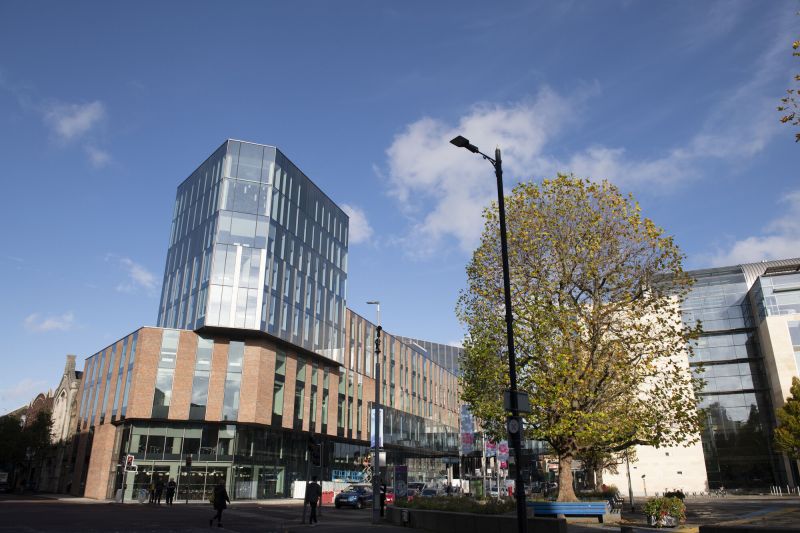
The BB, BC and BD building at the Belfast campus have a BREEAM Excellent rating. Retrofit projects aim for, at a minimum, BREEAM Very Good.
The Capital Development and Retrofit Projects – Sustainable Design Procedure is issued to all consultants as part of the university’s Building Engineering Service Standards. The procedure ensures that sustainability principles are embedded in all capital and retrofit works.

Digital Infrastructure
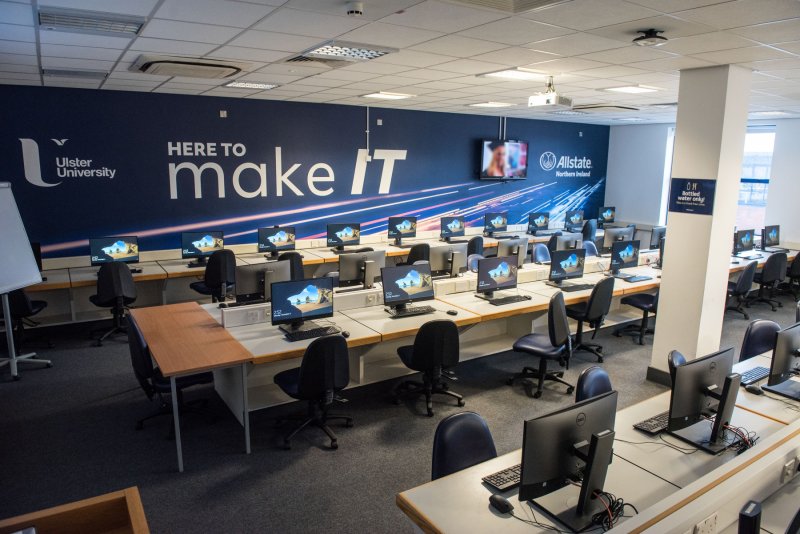
- Ulster University’s electricity use, including on-site and cloud-based data centre operations, is supplied by 100% renewable electricity through a combination of on-site generation, renewable procurement, and Microsoft’s renewable-powered UK and Ireland operations.
- Dell, the University’s server provider, was required to hold ISO 14001 certification through the tender process and operates certified environmental management systems, alongside energy-efficient hardware design, lifecycle carbon footprint reporting, and circular economy take-back and resource recovery programmes.

- Reducing site weight and unnecessary functionality by removing unused pages, scripts, plugins, tracking tools, and duplicate assets, and minimising non-essential features such as autoplay media and heavy carousels. The site achieves a 70% SEMrush health score (vs 74% benchmark) and a 98% Silktide accessibility score (vs 92% benchmark).
- Performance is improved through optimised image delivery (CDN, WebP, responsive sizing), lazy loading, pagination instead of infinite scroll, lightweight code, and tightly controlled third-party scripts. Video is generally externally hosted and moving towards click-to-play.
- Following migration to Squiz DXP (Jan 2026) on AWS with Cloudflare, further optimisation work is ongoing, including asset compression and delivery improvements, within an accessibility-first, mobile-efficient design approach.
Path Forward
Through investment in renewable energy, ongoing efficiency upgrades, and data-driven decision making, Ulster University is reducing its environmental impact and building a low-carbon future. These efforts are integral to our commitment to creating more sustainable campuses for our staff, students, and wider community.