


A collaborative film lab bringing together students, graduates, and industry professionals from Northern Ireland and India is underway this week at Ulster University in Derry~Londonderry, connecting international creative talent through collaborative filmmaking, emerging screen technologies and industry-focused creative R&D. This marks a significant step forward in Ulster Screen Academy’s growing international partnerships and global screen industry engagement.
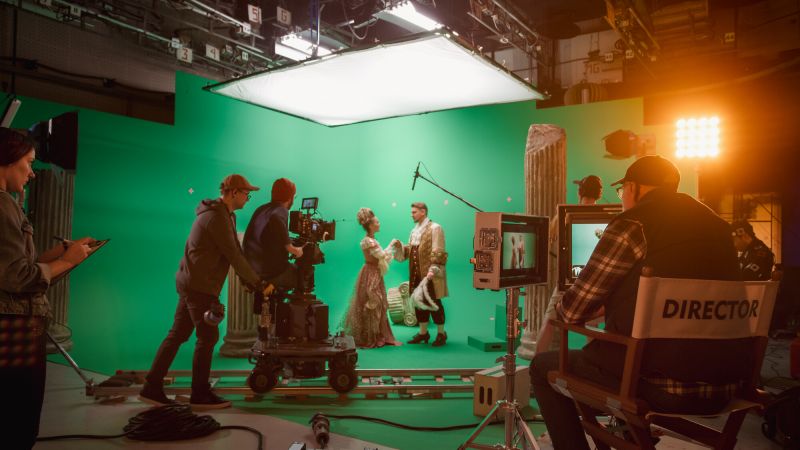
Running from 18–22 May, Virtual Production Beyond the Studio: A Derry/Londonderry × Mumbai Collaborative Film Lab brings together participants from Ulster Screen Academy, Whistling Woods International (Mumbai), Animotive (NI), and HopeFX (Mumbai) to co-create a short film using portable and accessible virtual production approaches — including green screen workflows, previsualisation, virtual cameras, and digital production pipelines — exploring how high-quality virtual production can be developed without reliance on costly LED volume infrastructure.
What does the project explore?
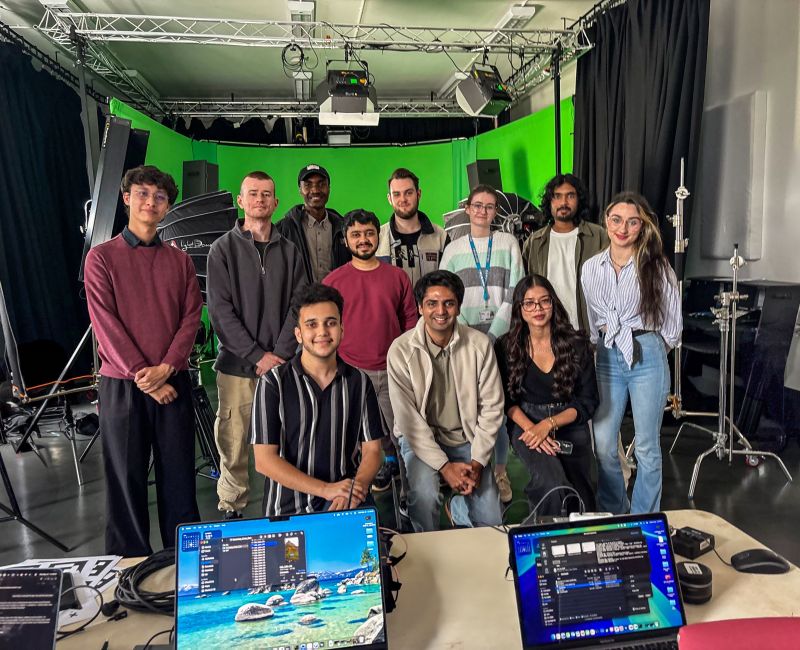
Supported by the British Council’s Going Global Industry-Academia Collaborative Grant, the project explores how accessible technologies, collaborative workflows and creative experimentation can broaden access to emerging screen production practices. Six visiting professionals from India are on campus this week, working alongside Ulster University students, graduates from across every campus, and industry partners including Animotive (NI) in a live creative production environment that prioritises intercultural exchange, collaboration and real-world employability.
Leading the project is Dr Victoria McCollum, who commented:
“Virtual production is often associated with specialist facilities and significant infrastructure investment, but projects like this demonstrate what becomes possible when creative practice, industry collaboration and emerging technologies intersect.
"Bringing together students, graduates and industry professionals from Northern Ireland and India to work collaboratively in real production environments creates opportunities not only for technical skills development, but for experimentation, problem-solving and the kinds of interdisciplinary working practices increasingly shaping contemporary screen industries.
"Partnerships with Whistling Woods International, HopeFX and Animotive reflect our commitment to connecting students with global industry networks and creating learning environments that extend beyond traditional classroom models.”
Bavatharani Anantharaja, MA Film and Television Production (INTERNATIONAL) graduate said:
“Having studied at Ulster as an international student from India, it is really special to now be part of a project bringing people together between Northern Ireland and Mumbai. Creative collaboration across borders opens up new ideas, new perspectives and new possibilities.”
Eva Tinney, BSc Cinematic Arts student said:
“Studying at Ulster from Donegal, I’ve always valued the opportunities that come from learning across borders. Working on an international project like this reminds you how creative collaboration can bring different perspectives together in really exciting ways.”
Karan Taley, VFX Supervisor at Whistling Woods (Mumbai) said:
“What makes this collaboration particularly meaningful is that it builds on an existing relationship between our institutions. We’ve welcomed Ulster students to Mumbai, and now we are delighted to work together again in Northern Ireland, creating opportunities for students and professionals to learn from one another across cultures, technologies and creative practice.”
The initiative sits under the broader British Council-funded project The Virtual Sandbox: Experimental VP with Green Screen and Story World Design — Co-Creating Intercultural Cinematic Universes Between India and Northern Ireland, with Ulster University and Whistling Woods International as lead academic partners.
For students across screen, performance and digital production disciplines, the project offers a rare opportunity to work within an international co-production environment — combining industry engagement, creative experimentation and collaborative problem-solving in ways that extend learning beyond traditional teaching settings.