Who we are
The Human Trafficking Research Network (HTRN) is a multidisciplinary community of academics and practitioners who are engaged in human trafficking-related research. The HTRN exists to connect its members with one another to share knowledge, advice and opportunities linked to human trafficking research and with external stakeholders to share knowledge and develop impact.
The HTRN is established to serve the following key purposes:
- Forging and deepening connections between members of the Network and others researching or working in the thematic area of human trafficking
- Facilitating multidisciplinary (academic) exchange and insight on the topic of human trafficking
- Creating opportunities to present and discuss draft work, research methods and findings
- Fostering mutual support amongst Network members, for example through feedback on draft work, peer review, research-adjacent expertise (e.g. funding applications and impact work) and sharing professional opportunities (funding calls, job and consultancy opportunities, events and publications)
- Enabling exchange with external stakeholders to share knowledge and develop impact
- Facilitating member-led activities which pursue the above and related purposes


HTRN Online Seminars
The Human Trafficking Research Network regularly hold online seminars, where members of our network or invited guests present work in progress or recently published human trafficking research.
The seminars are free to attend and often attract participants from a range of countries and contexts.
HTRN Interest Groups
Interest Groups offer a structured space for interaction and collaboration between HTRN members, organised by shared commonalities, such as a research or expertise theme, discipline, professional or regional context.
They can:
- Provide our members with opportunities for more active engagement with the Network
- Continue to build a sense of community
- Create a platform for member-to-member engagement and collaboration
- Encourage membership-led initiatives/events
Pitch your own Interest Group - HTRN Interest Groups

Members are welcome to pitch their own interest groups, with the following terms of reference:
- Meetings are to be held (online) at least 4 times a year
- Interest Groups must have a minimum of 5 (active) members
- One Steering Group member will participate in and monitor the functioning of (pilot) interest groups
- All HTRN Members will be informed of activities/updates via the HTRN newsletter
At present, our two pilot interest groups are Survivor Inclusion and Engagement and Conflict and Displacement.


Conferences and Initiatives
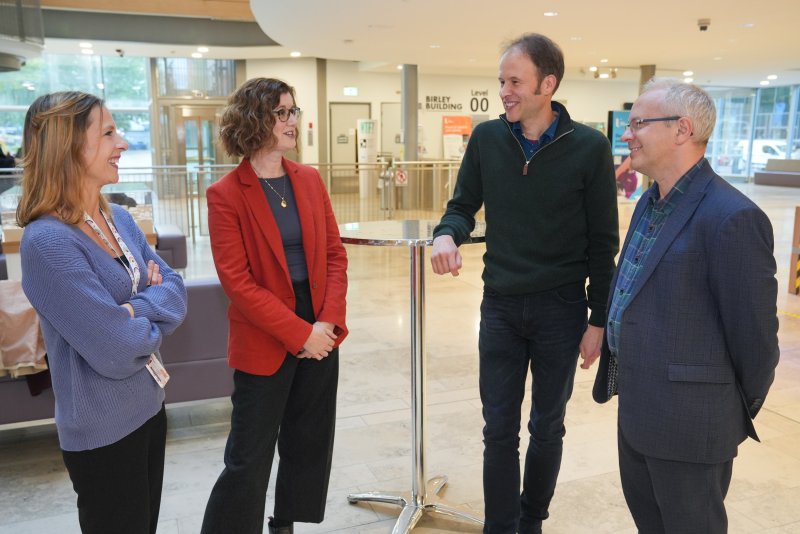
First convened in 2020, the HTRN Conference format has evolved from its initial online-only iterations to being an in-person event that takes place every other year. The 2026 conference was themed Reframing Trafficking – Knowledge, Policy, and Practice at a Crossroads and took place at Northumbria University in Newcastle, UK. On years where there is no HTRN Conference, the Network convenes thematic workshops. Our 2027 workshop will be themed “Research for Practitioners.”
2026 Conference
Our 5th conference, Reframing Trafficking – Knowledge, Policy, and Practice at a Crossroads, on 18–19 June 2026 was held at the School of Law at Northumbria University. Across the two days, there were over 100 registered participants including researchers, practitioners, policymakers and those with lived experience who joined online and in person.
This programme has the widest global spread of presenters from any HTRN event thus far and explored a wide range of contemporary issues across 6 panels, including:
- Epistemic injustice
- Environmental change
- Livelihoods and exploitation
- Conflict
- Displacement and trafficking
- Digital technologies and AI
- Survivors’ experiences
- Vulnerability
- Law and policy
The discussions highlighted the importance of questioning established assumptions about trafficking, recognising structural drivers of exploitation, and centring diverse forms of knowledge and lived experience.
Additionally, we had two featured keynote addresses. Dr Katarina Schwarz, United Nations Special Rapporteur on contemporary forms of slavery and trafficking in persons and Associate Director of the University of Nottingham Rights Lab’s Law and Policy Programme, opened the conference with a keynote exploring the current anti-trafficking framework, the progress made, the challenges and what remains on the horizon.
On the second day, Jane Lasonder, survivor leader, international speaker and Chair of the Hope for Justice International Survivor Council and Vice Chair of the International Survivors of Trafficking Advisory Council brought survivor leadership and lived experience to the heart of the conference sharing that ‘real survivor leadership means sharing power, it means sharing leadership…it’s not just asking someone to tick a box at the end’.
Edited Collection
Dr. Silvia Rodríguez-Lopez (University of A Coruña) and Dr. Amy Weatherburn (KU Leuven) have coordinated a Routledge edited collection titled Learning from Failure in Human Trafficking Law, Policy and Practice: An Introduction. The collection features contributions that consider lessons learned from 25 years since the passage of the Palermo Protocol, what might constitute key attributes for a successful global response to human trafficking, and what needs to change for public policies to have a real impact on those affected by human trafficking.
Special Issue
Following the 2026 HTRN Conference, the HTRN Publications Committee is working on a Special Issue highlighting some of the conference panellists' critical interventions.
2025 Members Meeting
On 10 September 2025 the HTRN held our first online members' meeting to share with the members of the community the past activities, future plans of the Network and opportunities to get involved. This members' meeting also included breakout sessions where members of the Network were able to engage with each other and members of the Steering Committee.
2025 Methodology Workshop
On 6 June 2025, we collaborated with Asylos to host “Recognising Lived Experience as Expertise: A Workshop on Inclusion in Research on Movement and Exploitation”. This hybrid workshop brought together approximately 90 lived-experience experts, researchers and practitioners to explore how lived experience can be recognised as legitimate and vital expertise in research and policy relating to asylum, statelessness, human trafficking and Country of Origin Information and arose from conversations within the Network about the hierarchies and tensions in producing knowledge and research.
Through an expert panel and interactive discussions, the workshop examined the power dynamics surrounding the relationship between lived and learned expertise and challenged the tendency for academic and professional credentials to be privileged over knowledge derived from direct experience of movement, displacement and exploitation.
Coming out of this workshop, we co-produced Call to Action with participants which was jointly published by Asylos and the HTRN.
The Call to Action which sets out six principles for more inclusive research, including honest and transparent engagement, meaningful involvement from beginning to end, fair remuneration and development opportunities, clarity about expertise and skills, ethical engagement, and enhancing the credibility of Country of Origin Information research.
We are also pleased that the planning committee had an opportunity to reflect on the process and learnings from executing this event by producing a forthcoming book chapter: “Lived Experience as Expertise: Making Inclusion in Exploitation Research the Rule Rather than the Exception”. The chapter will be in the edited collection Learning from Failure in Human Trafficking: Law, Policy and Practice edited by Silvia Rodríguez-López and Amy Weatherburn with publication expected with Routledge in 2026.
The forthcoming chapter extends the workshop's central theme that lived experience should be recognised not as an exceptional or supplementary source of knowledge, but as an integral part of rigorous and responsible research on exploitation.
Call to Action
In September 2025, together with Asylos, the HTRN published a Call to Action—Recognising Lived Experience as Expertise: Inclusion in Research on Movement and Exploitation.
The Call to Action is directed at those working in research and practice on issues relating to movement and exploitation. The action points are interrelated, and if pursued together, will result in a fairer, more transparent approach to the inclusion of lived experience expertise in research on movement and exploitation.
Read the full Call to Action here and sign the pledge.
2024 Conference
Our 4th Conference, Multidisciplinary Perspectives on Human Trafficking from Research and Practice was held on 20–21 June 2024 at the Faculty of Law, University of A Coruña, Spain. This was our first in-person conference, following several successful online conferences. Across two days, the conference examined human trafficking from a wide range of perspectives, including technology and trafficking; national and international anti-trafficking policies; criminal justice responses; gender; labour exploitation; root causes and vulnerabilities; and survivors' voices.
The conference featured a keynote address by Professor Carolina Villacampa Estiarte (University of Lleida) on “Human Trafficking for labour exploitation: Data and institutional responses in Spain.”
The event brought together an international community committed to advancing multidisciplinary understanding of trafficking and strengthening connections between research, policy and practice.
This conference has also concluded in a forthcoming edited collection ‘Learning from Failure in Human Trafficking: Law, Policy and Practice’ edited by Silvia Rodríguez-López and Amy Weatherburn expected to be published by Routledge in 2026.
2023 Galway Workshop
In 2023, the Human Trafficking Research Network brought members of its community together at the Irish Centre for Human Rights, University of Galway, for a workshop exploring Contemporary issues in human trafficking law and policy. The workshop provided a forum for researchers working across law, human rights, migration, labour and related disciplines to present work in progress, receive constructive critique from peers, exchange ideas and develop interdisciplinary collaborations.
2022 In-Person Gathering, Belfast
In 2022, we held our first in-person event, at Queen’s University Belfast School of Law. The event was an opportunity to connect, get to know one another and share about our research.
2021 2nd Conference
In 2021, we hosted our second conference online. The conference theme was: 'Challenging Assumptions about Human Trafficking'. In addition to keynote addresses from Professor Nandita Sharma and Mr Mike Dottridge, a range of thematic panels addressed themes such as victim narratives and gender stereotypes within the trafficking discourse, as well as state and non-state responses to trafficking. We were also delighted to welcome practitioners to discuss their work in preventing and tackling human trafficking in practice.
Study Sessions
In the 2025–2026 Academic Year, the HTRN piloted Study Sessions. Study Sessions provided a dedicated and supportive online space for researchers to focus on their work while connecting informally with others in the field.