



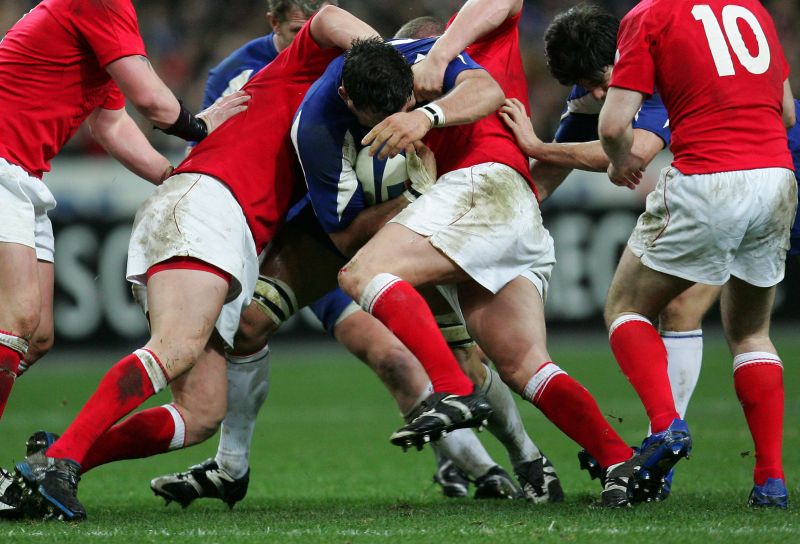
Research led by Dr Gregory Tierney at Ulster University has revealed indicative differences in concussion rates and head impact exposure between elite rugby union and the National Football League, strengthening calls for greater transparency in sports injury data.
The study compares publicly available injury surveillance reports and biomechanical data from English rugby union and the National Football League (NFL), examining concussion incidence, head acceleration events (HAEs), professional career length and seasonal match demands.
Longer careers and greater match availability in rugby union
Dr Tierney’s analysis found that elite-level rugby union players typically have longer professional careers and more matches available per season than their NFL counterparts.
While the average NFL career is often reported as lasting between three and six years, professional rugby union careers frequently extend beyond a decade. The English rugby calendar can also offer a greater number of potential match involvements across domestic league, cup and European competitions, alongside international fixtures.
Greater career length and match exposure may contribute to increased cumulative concussion and head impact exposure over time.
Higher reported concussions per match
Using injury reports from the Rugby Football Union (RFU) and the NFL, the research indicates that elite-level English rugby union reports a higher number of concussions per match than American football.
Concussion has consistently been the most commonly reported match injury in English professional rugby in recent years. The study also suggests that a higher proportion of total concussions occur during training sessions in English rugby union compared to the NFL.
Dr Tierney adds that differences in match structure, substitution rules, tackling demands and reporting frameworks between the two sports may influence the reported figures.
Measuring head acceleration events
Beyond diagnosed concussions, the study examined head acceleration events (HAEs), measurable impacts to the head recorded using wearable technologies such as instrumented mouthguards (iMG).
Recent league-wide iMG research in English Premiership rugby union indicates that players may experience a higher incidence of HAEs per player match, across both lower and higher magnitude thresholds, than comparable positional groups in American football.
Player Safety
"Instrumented mouthguards in sport are promising, but credibility comes from transparency. Independent oversight and shared data access are key to making the technology truly effective for player safety."
The importance of independent research funding
The study also raises wider questions about governance and transparency in concussion research.
Concussion research
"The primary funding mechanisms for concussion research in sport is through governing bodies and their allied institutions/researchers, which can create potential conflicts of interest. A more transparent approach would see funding allocated through established research councils capable of running independent funding calls."
Dr Tierney argues that greater independence in funding allocation, harmonised signal-processing standards, and transparent access to anonymised datasets would strengthen scientific credibility and public trust.
Answer to player-safety questions
"The answer to these important player-safety questions already exists, if governing bodies allow independent researchers access through a controlled-access data repository."
Contributing to global player welfare discussions
Concerns around concussion and repetitive head impact exposure continue to grow across contact sports worldwide. High-profile legal cases in both American football and rugby union have intensified scrutiny of player safety and long-term neurological health.
This research from Ulster University contributes to the international evidence base by comparing cumulative exposure trends across two of the world’s most physically demanding team sports.
While both elite-level American football and rugby union face significant safety challenges, the findings indicate that elite-level rugby union players in England may experience greater cumulative exposure across several key metrics. The research underscores the need for independent, transparent and harmonised data systems to better inform sport-specific safety policies and protect athlete welfare.