



The FAIR principles as a journey to Findable, Accessible, Interoperable and Reusable research
The FAIR guiding principles are not a checkbox exercise, that once finished, is done. Thinking about 'FAIRness' as a journey rather than a destination, allows you to view the principles as guiding an ongoing, practical process to deliver transparent, rigorous and reproducible research.
The FAIR principles are relevant throughout every step of your research lifecycle.

What are the FAIR Principles?
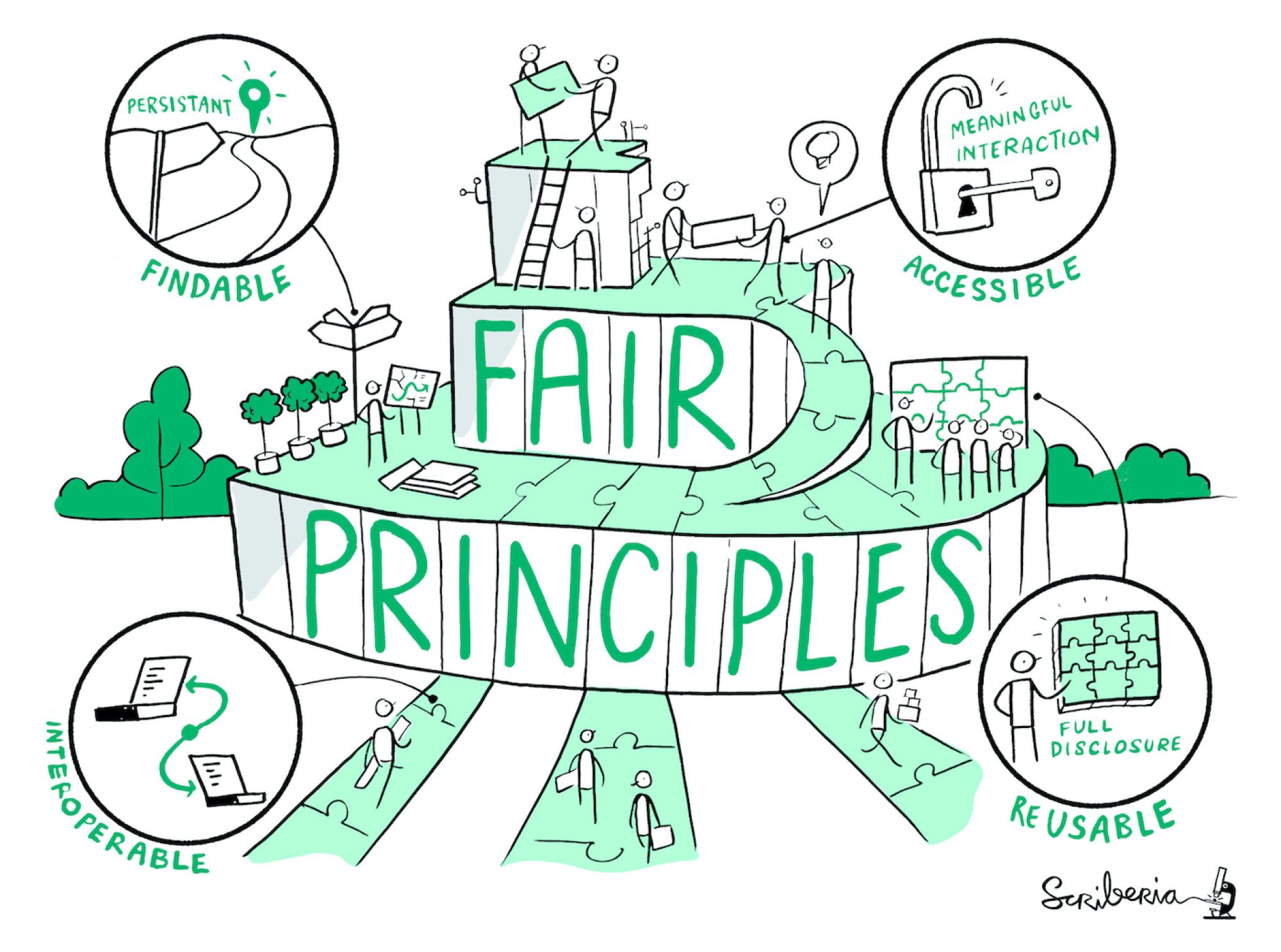
Why you need to understand FAIR Principles
In 2016, the ‘FAIR Guiding Principles for scientific data management and stewardship’ were published in Scientific Data to guide researchers in increasing the Findability, Accessibility, Interoperability and Reusability of their data. They have become the global standard practice for managing research data and have been endorsed by research funders and woven into open science mandates.
It was the authors intent that the FAIR principles should be applied beyond datasets to include the algorithms, tools and workflows that led to that data. And further still, argued that all scholarly digital research objects benefit from application of these principles, since all components of the research process must be available to ensure transparency, reproducibility, and reusability.

FAIR for all disciplines
The FAIR principles can seem science-focused but they are equally relevant to arts, humanities and social sciences research. FAIR is not equal to Open. The 'A' in FAIR stands for 'accessible under well defined conditions' (GO FAIR) and includes safeguarded access to sensitive data as well as restricted access to personal or copyrighted content. The FAIR principles do not require Open; they do require transparency about the conditions governing access and reuse.

Practical steps in a FAIR journey
F is for making data findable:
- Upload to and share your data via a repository
- Describe your data with as much detail as possible
- Apply a Persistent Identifier e.g. DOI.
A is for making data accessible:
- Consider what can and will be shared under which conditions
- Obtain participant consent and perform risk management.
I is for making data interoperable:
- Use open standardised and common formats
- Consistent vocabulary
- Apply common metadata standards.
R is for making data reuseable:
- Consider permitted use
- Apply appropriate licence
- Add sufficient documentations and provenance information
- When using data of others, give credit by data citation.
Knight, Gareth. Preparing Data for Sharing: The FAIR Principles. Presentation, 1 December 2015.
PARTHENOS. PARTHENOS Guidelines to FAIRify Data Management and make data reusable. 2019