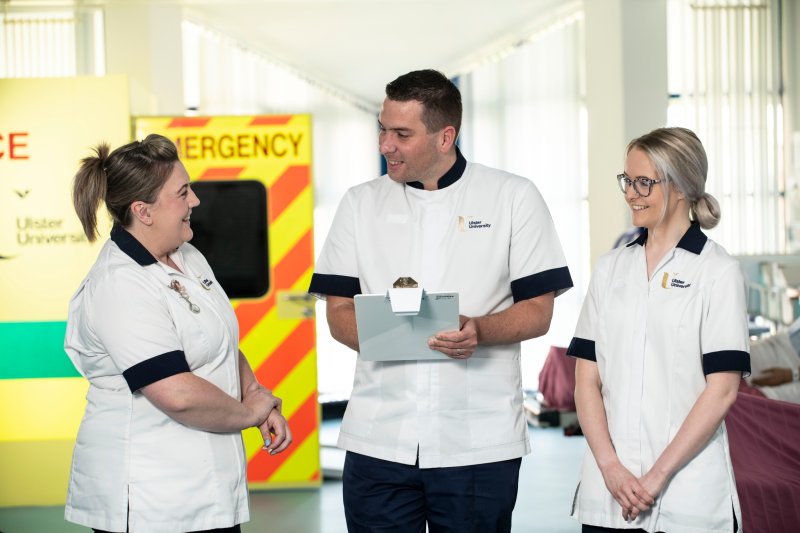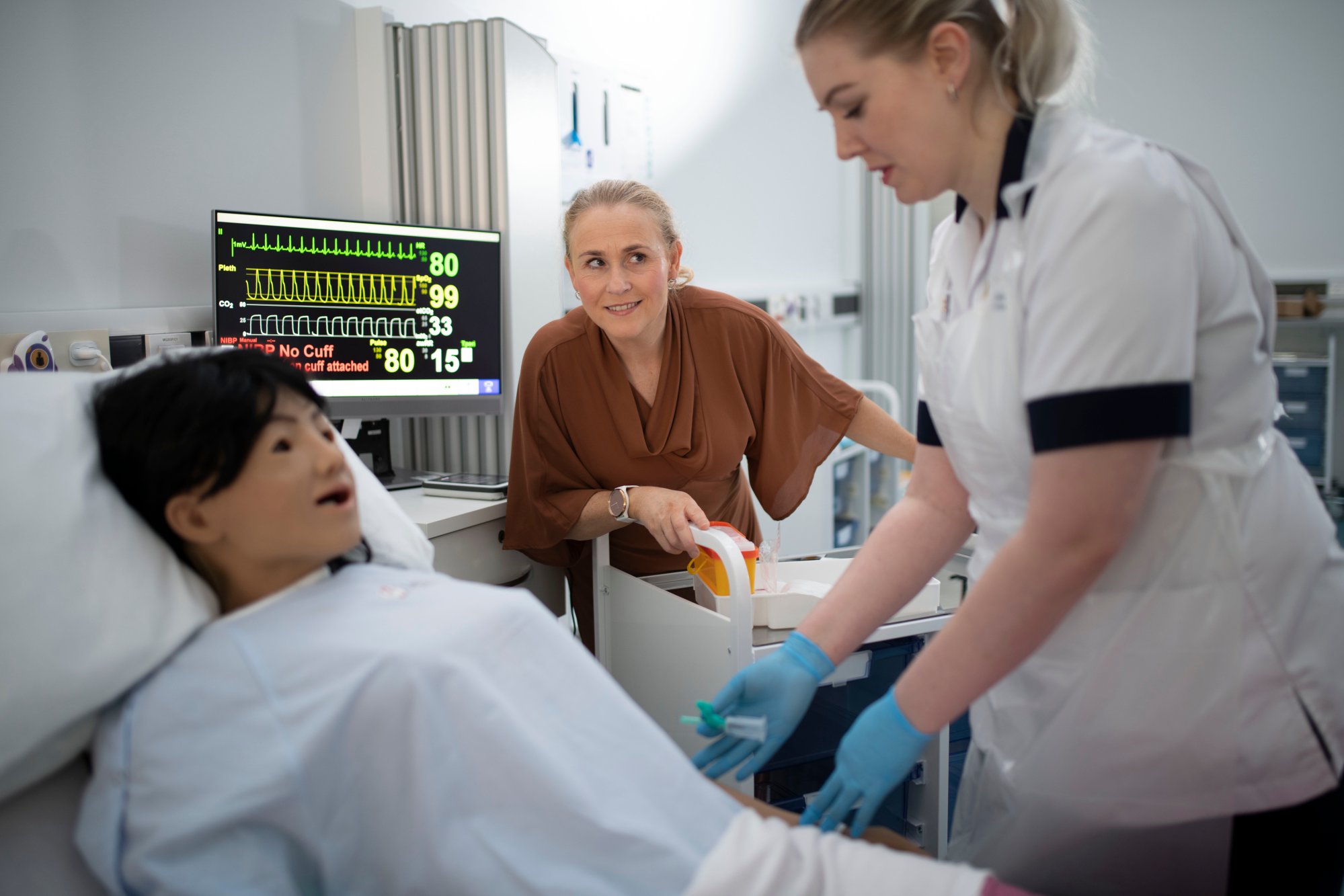
Researchers from the School of Health Sciences are transforming how nursing students learn about patient care by using art and personal stories to deepen understanding and empathy.
A team of researchers from the School of Health Sciences identified that as nursing students progress through their degree programmes, levels of empathy appear to decline. Determined to address the issue, the researchers explored innovative ways to reconnect students with the human experiences behind healthcare.
Their solution emerged through a partnership with a cancer support charity, HIVE, that had collected a unique archive of journals, artwork and creative reflections produced by people living with cancer during a therapeutic retreat. Together, these powerful expressions of lived experience offer an intimate insight into the emotional, physical and personal realities of illness.
The collection is now being utilised on the Derry~Londonderry campus, where it will become an integral part of healthcare education. Students will engage with the artwork and personal narratives early in their studies, helping them to better understand the perspectives, challenges and emotions experienced by patients.
Dr Joanne Marley and Mr Ally McKeown are leading the project and believe the creative materials can provide a powerful bridge between clinical learning and compassionate care.
"While students gain extensive knowledge and practical skills throughout their training, it is equally important that they develop and maintain the empathy needed to deliver person-centred care," the research team explained. "The artwork allows students to see beyond a diagnosis and connect with the real experiences of the people they will one day support."
By embedding the collection within teaching practice, the researchers hope to create richer learning experiences that encourage reflection, emotional awareness and deeper engagement with patient perspectives.
The initiative highlights how creative approaches can enhance nursing education and prepare students for the realities of modern healthcare; that fostering empathy throughout training will not only benefit future healthcare providers but also improve the experiences of the patients and families in their care.
As students encounter the collection during their learning, the project stands as a powerful example of how research can directly shape teaching practice, ensuring that compassion and empathy remain at the heart of nursing education.