



How can public money work better for everyone? That simple but powerful question has been at the heart of Ulster University’s Gender Budgeting Research Project for the past seven years.
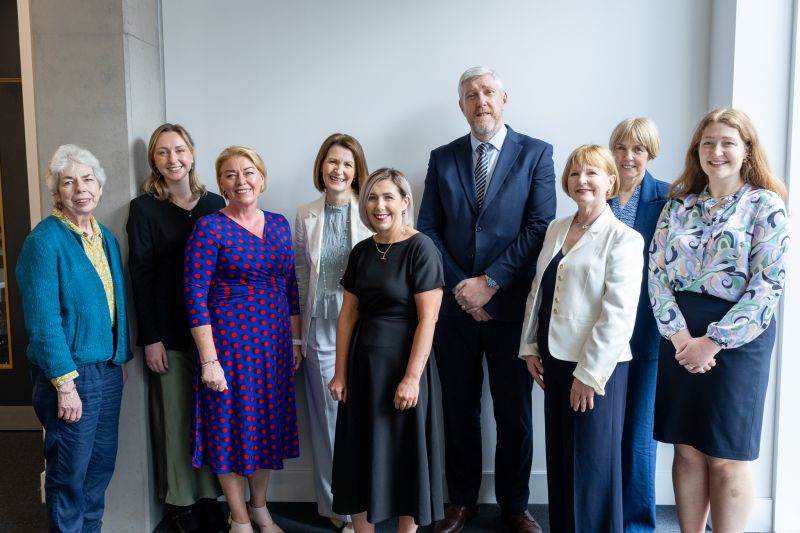
On 17 June 2026, researchers, policymakers, civil servants and community leaders gathered at the Belfast campus for a special end-of-project conference marking seven years of pioneering research into gender budgeting. Supported by the Joseph Rowntree Charitable Trust and delivered in partnership with the Northern Ireland Women’s Budget Group, the project has helped place equality-informed decision-making firmly on the public policy agenda in Northern Ireland and beyond.
The conference brought together delegates from civil society organisations, local government, government departments, statutory bodies and international institutions, demonstrating the growing interest in how budgets can be used as a tool to improve outcomes across society.
Opening remarks were delivered by the Minister of Finance, while the keynote address came from a representative of the Organisation for Economic Co-operation and Development (OECD), highlighting the increasing international recognition of gender budgeting as a vital component of effective public governance.
What is Gender Budgeting?
Despite its name, gender budgeting is not about creating separate budgets for men and women. Instead, it is a process that examines budgets, policies and public services through a gender lens.
Gender budgeting recognises that people experience public policy differently depending on their circumstances and identities. It considers how gender interacts with other equality characteristics and social factors, helping policymakers understand the diverse impacts of decisions before they are implemented.
In practice, this means asking important questions: Who benefits from a policy? Who may be disadvantaged? Are resources reaching the people who need them most? By addressing these questions, decision-makers can design policies that are more responsive, equitable and effective.
Gender Budgeting Importance
Every budget decision has real-world consequences. Whether it is investment in healthcare, support for families, education funding or measures to tackle poverty, public spending shapes the daily lives of citizens. Gender budgeting provides policymakers with evidence and tools to better understand these impacts. It can reveal how challenges such as health waiting times, child poverty or access to services affect different groups in different ways.
This deeper understanding can lead to better policy design, more targeted spending and improved outcomes for communities. When resources are aligned more closely with strategic priorities and identified needs, public money can be used more efficiently, reducing waste while increasing the likelihood that policies achieve their intended goals.
Ultimately, gender budgeting is about improving decision-making. By considering the lived experiences of different groups, governments and public bodies can make choices that deliver greater value for society.
Gender Budgeting Research
Building Expertise and Influence
Over the course of the project, Ulster University has established itself as a leading centre of expertise in gender budgeting research and knowledge exchange. The project has brought together expertise from a range of academic fields; Professor Ann Marie Gray, Professor of Social Policy; Professor Joan Ballantine, Professor of Accounting; Dr Michelle Rouse, Lecturer in Criminology; and Aoife Mallon, Research and Engagement Associate.
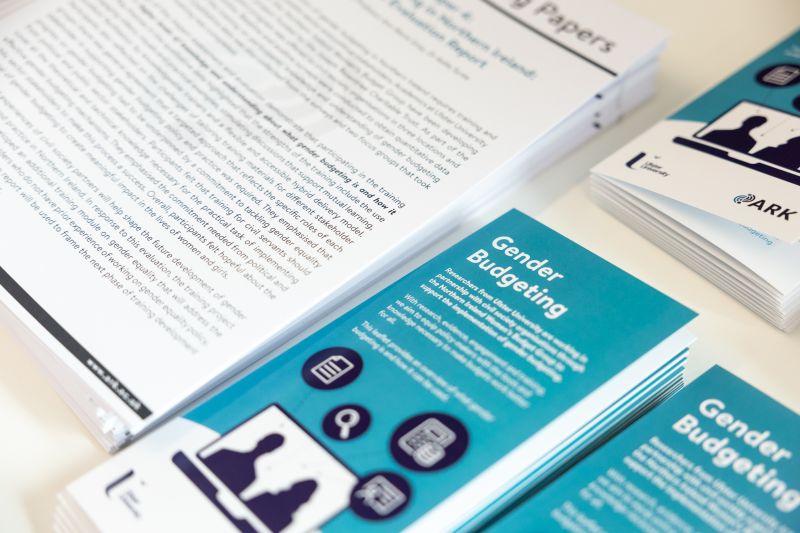
The research team has produced four Gender Budgeting Working Papers and two training videos, providing accessible resources for policymakers, practitioners and the wider public. These materials are available through the ARK website, ensuring that the project's findings and tools continue to support future learning and practice.
Beyond research outputs, the team has played a significant role in building capacity across Northern Ireland. Researchers have developed and delivered an extensive gender budgeting training programme for participants from the civil service, civil society organisations and the Northern Ireland Assembly. Through this work, hundreds of individuals have gained a deeper understanding of how gender-aware analysis can strengthen public policy and financial decision-making.
Research with Impact
While the conference celebrated the conclusion of a funded research project, it also highlighted the lasting impact of seven years of collaboration, evidence-building and knowledge exchange.
John O'Dowd, Minister of Finance said:
“I want to express my thanks to the Ulster University research team and the Northern Ireland Women’s Budget Group. In an open and meaningful way, they have engaged with my Officials, sharing learning and best practice, to explore how the principles of gender budgeting can be used to improve how we in government do things…
Using gender budgeting principles, we can improve on what we already do, strengthen our understanding of the gendered impact of policy, supporting more informed decisions… We want to pilot gender budgeting within Government, test how it fits within exiting processes, how it adds value, and how it can support better decisions on how money is spent…
At its core, gender budgeting is about fairness. It is about recognising that good decision making requires us to understand differences and to respond to them appropriately… I want to congratulate you on the work you have done over the last 7 years and thank you for the generosity with which you have shared your time and learning… I look forward to working with you in the future and implementing change across how we deliver finances to our public services and our wider economy.”
In an era when every public pound matters, gender budgeting provides a powerful reminder that good policy starts with understanding people and that thoughtful, evidence-based decisions can lead to better outcomes for everyone.