


Popular culture plays a powerful role in shaping how we understand ourselves, our histories and the societies we live in. For Dr Victoria McCollum, exploring that influence is at the core of her research. Through her work across film, television, games and immersive media, she examines how popular media engages with issues of identity, conflict, memory and political change, and why these stories matter far beyond the screen.
Popular Culture Research and Social Change
Dr McCollum's research explores the cultural and political work performed by popular media: how the stories societies tell and consume respond to social anxieties, negotiate trauma, shape collective memory and influence ideas about identity and belonging. Her scholarship spans topics ranging from Trump-era horror cinema to contemporary regional sitcoms, all united by a common interest in understanding how popular culture reveals how seemingly familiar forms of popular entertainment can become spaces in which political and cultural tensions are negotiated.
The Academic Impact of Derry Girls
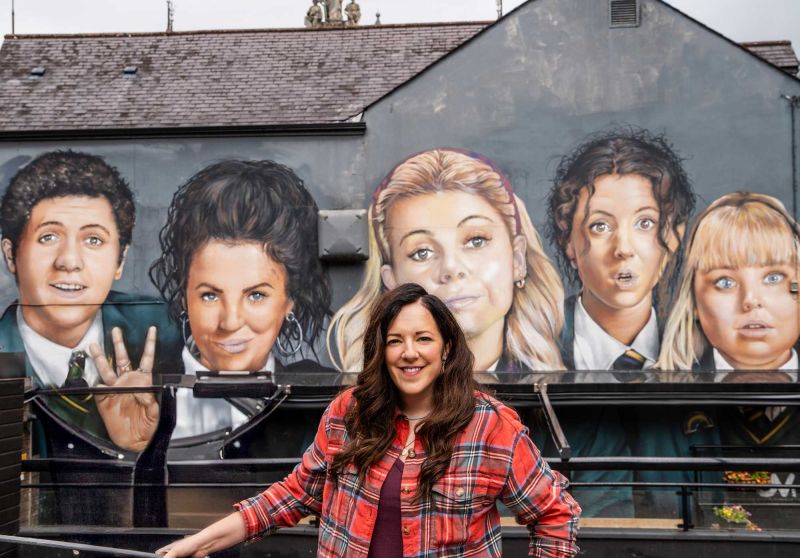
At the centre of her current research is a forthcoming monograph that offers the first comprehensive academic study of the internationally successful television series Derry Girls. The book examines how the series reframes life in 1990s Northern Ireland through comedy, exploring its treatment of conflict, gender, sexuality, religion and identity while considering its global reception and extraordinary cultural impact.
Dr McCollum argues that Derry Girls does something distinctive with the Troubles: it shifts attention away from political leaders, paramilitaries and violence and towards the ordinary lives unfolding around conflict. Through comedy, teenage experience and the everyday, the series offers a different way of remembering Northern Ireland's recent past. The book situates Derry Girls within wider debates in television studies, including discussions around regional storytelling, post-conflict memory, nostalgia and transnational audiences.
The book also examines the remarkable international reach of a story rooted so specifically in Derry, asking how culturally particular narratives travel and what Derry Girls' global reception reveals about the relationship between local identity and universal experience.
This interest in how popular culture responds to political and social anxiety extends across Dr McCollum's wider research, including her work on horror, nationalism, gender politics and historical trauma.
Research on Horror, Nationalism and Cultural Anxiety
Through analyses of contemporary television and earlier work on horror and political culture, she investigates how screen narratives engage with nationalism, gender politics, historical trauma and social anxiety.
The Islandmagee Creative and Digital Project
The impact of Dr McCollum's research also extends beyond conventional academic publishing. Through the Islandmagee Creative and Digital Project, co-led with Dr Andrew Sneddon, she has worked with museums, schools, councils, creative practitioners and community organisations to explore how difficult and contested histories can be encountered through games, theatre, exhibitions and immersive media.
This work asks not simply how research can be made accessible, but how creative forms can enable audiences to experience historical uncertainty, belief and competing interpretations of the past.
These initiatives have moved into school, museum and international teaching contexts, demonstrating how research can generate new educational and cultural resources as well as traditional academic outputs. By connecting scholarship with public history and creative practice, Dr McCollum's work explores new ways of engaging audiences with complex and contested pasts.
Research Impact Beyond Academia
These initiatives have generated new educational and cultural resources while extending the reach of research into schools, museums and international teaching contexts. By connecting academic scholarship with public history and creative practice, Dr McCollum's work demonstrates how research can foster engagement, dialogue and new ways of understanding the past.
Advancing Screen Studies and Public Engagement
The forthcoming Derry Girls monograph brings these interests in popular culture, memory and post-conflict representation to an international audience. Its foreword, written by Dr Chelsea Clinton, reflects both the extraordinary global reach of the series and the wider cultural and political questions raised by a story so firmly rooted in Northern Ireland.
Through her scholarship, public engagement activities and collaborative projects, Dr Victoria McCollum demonstrates how screen studies can operate at the intersection of cultural analysis, public understanding and societal dialogue. Across this work is a consistent concern with what popular culture does in the world: how it shapes what societies remember, what they fear, how they understand one another and the futures they can imagine.