Living with Parkinson's: Can Alexa be your speech therapist?
PhD Researcher: Jodie Mills
For people living with Parkinson’s, the hardest part isn’t the tremor, it’s when someone says, “Speak up! I can’t hear you.” Talking is a battle when your speech is quiet and unclear. Speech and language therapy helps, but it’s not always there when people need it.
Jodie’s research asks if Alexa could help people with Parkinson's to keep practicing their speech and become more aware of their volume.
Results showed that practicing with Alexa meant more people could be heard, supporting independence and relationships.
Speech therapy doesn’t have to end when you leave the clinic [pause] It starts with ‘Alexa’.
Beyond One Size Fits All
PhD Researcher: Jamie McNulty
My research explores how digital mental health support can better fit the needs of neurodivergent young people across the island of Ireland, including those with ADHD, autism, and dyslexia.
Using large-scale population data, I found that one in three young people met criteria for diagnosed or probable neurodivergence, with significantly higher rates of anxiety, depression, self-harm, and suicidal thoughts.
My PhD explores whether digital tools can help bridge this gap, and works with neurodivergent young people to understand what makes support accessible, inclusive, and truly designed for the people who use it.
When a Hydrogen Tank Ruptures: How a Barrier Helps
PhD Researcher: Atish Gawale
Hydrogen-powered vehicles contain hydrogen gas stored at pressures ranging from 20–70 MPa. These tanks pose significant risks under fire-induced rupture, generating blast waves and structural hazards.
This research develops an advanced computer simulation framework to model fluid–structure interaction (FSI) for predicting structural response and damage resulting from hydrogen tank blast events.
Unlike conventional computational fluid dynamics (CFD) models that assume rigid structures, this study integrates FSI using LS-DYNA’s CFD solver coupled with a finite element analysis (FEA) solver. The coupled CFD–FEA simulations capture blast mitigation effects provided by deformable barrier walls, enabling more reliable safety assessment method.
Ultimately, the findings contribute to minimise the loss of life and property and support the development of future regulations and standards for barriers around hydrogen infrastructure.

One Simple Steak Swap: Lifelong Benefits
PhD Researcher: Clement Momoh
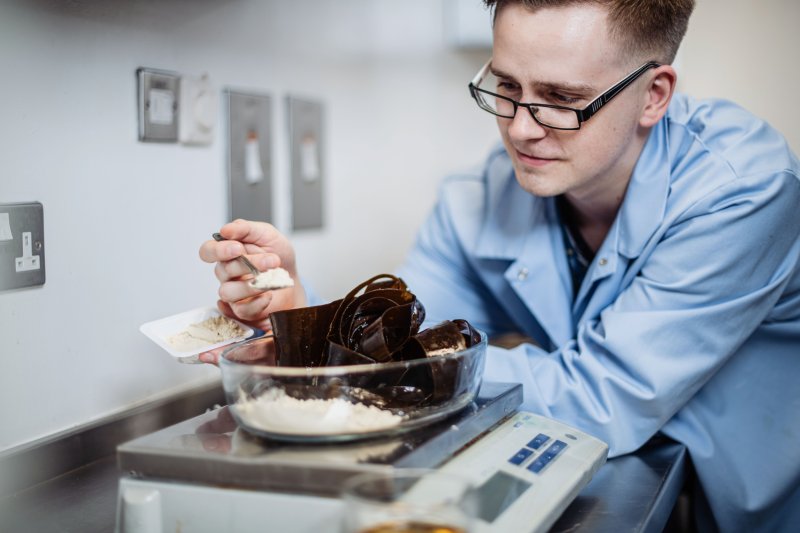
What if the choice between meat and fish could shape both your health and the planet’s future? Meat production contribute 15% of global emissions and is linked to higher heart-disease risk.
At the same time, millions of UK and Irish adults lack key nutrients like vitamin D, omega-3 fatty acids, iodine, and selenium. Fish offers a solution, rich in these nutrients and with a lower environmental impact.
My research shows that replacing just 25% of meat with fish significantly improves these nutrient intakes in UK/Irish adults. Fish alone will not eliminate these key nutrient deficiencies, but offers a seismic shift to better health and a happy planet.
One Loss. One in Five Futures
PhD Researcher: Julie Graham
Bereavement is a widespread yet often invisible struggle among students, many of whom balance profound grief with ongoing academic demands. This research, involving 258 bereaved UK university students, found high rates of prolonged grief, depression, and academic disruption, particularly among females and those who had experienced parental or suicide-related loss.
Although impacts lessened over time, the early effects of grief were severe. A review of UK university websites reveals an urgent need for more visible institutional support.
This thesis calls for systemic reform to ensure bereaved students are recognised, supported, and able to successfully continue their education after loss.

From Flare to Fair: Balancing Health for Better Psoriasis Treatment
PhD Researcher: Kazi Lutfar Rahman
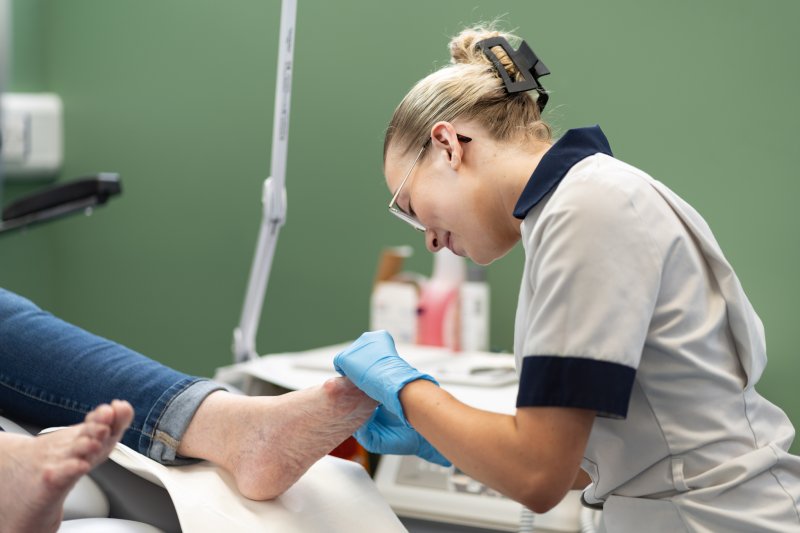
My research focuses on improving treatment outcomes for patients with severe psoriasis undergoing biologic therapy.
Psoriasis is a chronic condition with no cure, and biologic treatments often vary in effectiveness, leading to costly drug switching. I investigated whether three accessible factors; vitamin D levels, body mass index (BMI), and C-reactive protein (CRP), influence treatment stability.
Studying 120 patients, I found that those with low vitamin D, high BMI, and elevated CRP were more likely to switch treatments, while stable responders showed healthier levels. These findings suggest that simple, proactive monitoring could improve long-term outcomes, reduce costs, and support more effective, personalized psoriasis management.
"If I don't get to tell my stores, I cease to exist"
PhD Researcher: Tabassum Islam
Diversity policy in the UK film industry does not simply fail South Asian women, it
misrecognises why and how they remain excluded. It has no language for what happens when multiple axes of marginalisation collide.
Through interviews with 25 South Asian women filmmakers, festival observation and policy analysis, this research maps intersectional barriers across career stages. Class, economic and social, emerges as the decisive force,
intensified by migration status, caring responsibilities, London-centricity, entry-focused diversity policy and stereotypical expectations.
Their alternative pathways through diasporic networks, community crowdfunding, and guerrilla production reveal resilience against a system that continuously fails to support them.

How can Earth's sand dunes take you to Mars?
PhD Researcher: Varsha Natarajan
The surface of Mars was once thought to be inactive, until satellite images
revealed moving sand dunes and ripples. Tracking these changes is key to
understanding the Martian climate and present day weather.
My PhD studies how these features move using Earth analogues and mathematical models. I conducted fieldwork on an isolated dune in California with similar characteristics to those on Mars, measuring wind speed and sand transport using high-precision instruments. This data is then used to model and predict Martian wind conditions.
Understanding wind speeds allows us to estimate sand movement and identify
safer landing sites for future missions