


Representatives from academia, industry, healthcare, and charities have come together to help shape the next generation of Pharmaceutical and Biomedical Scientists through the new Northern Ireland Advanced Drug and Pharmaceutical Translation (NI-ADAPT) Doctoral Programme.
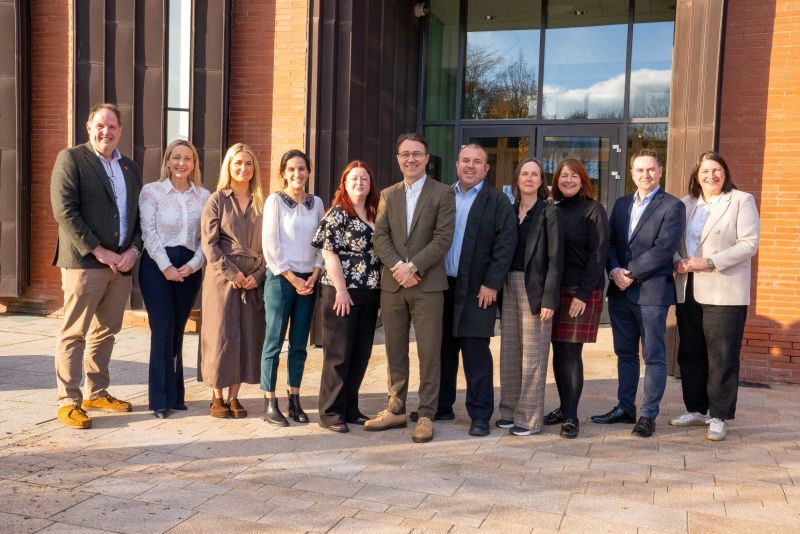
Hosted at Riddel Hall by Queen's University Belfast, the first NI-ADAPT Partner Sandpit, led by Professor Niamh Buckley, brought together representatives from over 30 organisations alongside academics from Queen's and Ulster University, to co-design the training and research priorities for the programme's inaugural cohort of doctoral researchers.
Funded through a Medical Research Council (MRC) Doctoral Landscape Award and led by Queen's University Belfast in partnership with Ulster University, NI-ADAPT will welcome its first PhD researchers in October 2027.
NI-ADAPT forms part of a wider ambition to strengthen Northern Ireland's position as a leading location for life sciences research and innovation. The programme will equip researchers to bridge a critical gap between scientific discovery and clinical application.
Students on the programme will combine disease biology and pharmaceutical science with artificial intelligence, advanced drug delivery, data analytics, regulation and commercialisation, preparing them to work across research, patient-centred healthcare and industry.
Attendees at the event included representatives from the pharmaceutical industry including Pfizer, AbbVie, Almac Discovery, Randox and Norbrook, alongside organisations including Invest NI, HIRANI, the Medicines Optimisation Innovation Centre (MOIC), Action Cancer, and Leukaemia & Lymphoma NI.
The event provided an opportunity for partners to directly influence the development of the NI-ADAPT programme, helping to identify priority research challenges, emerging skills needs and opportunities for collaboration. Discussions focused on ensuring doctoral researchers are equipped with expertise in areas such as artificial intelligence and data science, regulation, commercialisation and translational research.
Professor Chris McConville, Deputy Director of NI-ADAPT and Professor of Biomedical Innovation at Ulster University, said:
“The sandpit reinforced the value of involving our partners from the outset. Their message was clear: the next generation of PhD candidates will need deep scientific expertise alongside strong capabilities in artificial intelligence, data science, regulation, commercialisation and translational research.
This is an exciting project in which Queen’s and Ulster University, bring their combined strengths in biomedical innovation, pharmaceutical science and industry-engaged research to this partnership.
Working collaboratively, NI-ADAPT will create a connected training environment in which researchers can collaborate across disciplines and sectors, translating excellent science into medicines and technologies that deliver real benefits for patients, society and the regional economy."
Professor Gavin Andrews, Director of NI-ADAPT and Head of the School of Pharmacy at Queen's University Belfast, said:
"NI-ADAPT has been built on the principle that the most impactful research happens when universities, industry, healthcare providers, charities and patients work together.
It was incredibly encouraging to see such strong engagement from our partners as we begin shaping a programme that will develop the next generation of researchers and innovators. Their insights will help ensure that our students gain the skills, experiences and networks needed to translate scientific discoveries into treatments that deliver real benefits for patients and society.
By bringing together expertise from across the life sciences sector, we are creating a programme that will help strengthen Northern Ireland's research capability, support economic growth and accelerate the development of healthcare innovations."
The event marks an important step in building the partnerships that will underpin NI-ADAPT's long-term success, ensuring doctoral training is shaped by the needs of employers, healthcare providers, patients and communities while supporting the growth of Northern Ireland's life sciences sector.